Research Use Only Disclaimer
Glutathione is sold strictly for laboratory, academic and institutional research. It is not for human or animal consumption, injection, or any therapeutic, diagnostic or veterinary use. PCH Peptides does not provide dosage, administration or usage guidance.
What Is Glutathione?
Glutathione is a naturally occurring tripeptide composed of three amino acids: glutamate, cysteine and glycine. It is commonly abbreviated as GSH when referring to its reduced form.
Unlike conventional peptides, the glutamate residue in glutathione is connected to cysteine through a gamma-glutamyl linkage rather than the usual alpha-peptide bond.
This structural characteristic contributes to its resistance to cleavage by many conventional peptidases.
Glutathione contains a free thiol (-SH) group on its cysteine residue. This functional group participates in oxidation-reduction reactions, allowing glutathione to exist in reduced (GSH) and oxidized (GSSG) forms.
Its redox properties make glutathione an important compound in biochemical research involving cellular oxidative stress, thiol chemistry, antioxidant systems and enzyme activity.
Researchers investigate glutathione in laboratory models involving glutathione peroxidase, glutathione reductase and glutathione S-transferase activity.
It is also studied alongside other redox-related biochemical compounds, including NAD+, which participates in cellular oxidation-reduction reactions and energy metabolism.
For additional background on peptide structures and laboratory applications, explore the PCH Peptides Research Guide.
Glutathione 600mg Specifications
Property | Value |
Product name | Glutathione |
Also known as | GSH, Reduced L-Glutathione |
Compound type | Naturally occurring tripeptide |
Structure | Gamma-L-Glu-L-Cys-Gly |
Length | 3 amino acid residues |
Molecular formula | C10H17N3O6S |
Molecular weight | Approximately 307.3 g/mol |
Redox form | Reduced glutathione (GSH) |
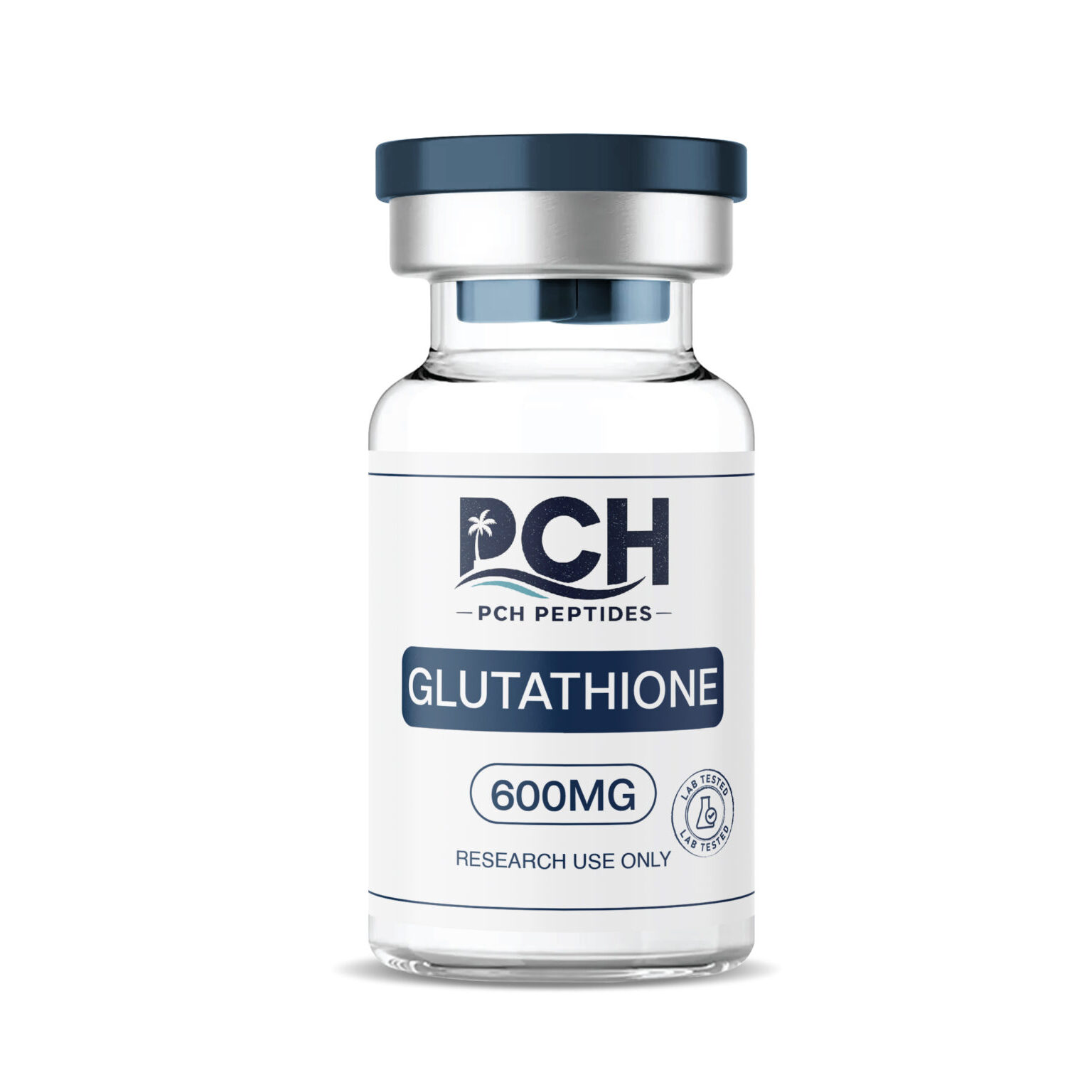
Amount per vial | 600mg |
Form | Lyophilized powder |
Purity | 99.88% |
Glutathione in Laboratory Research
Glutathione is widely investigated in biochemical research because of its role in thiol-dependent reactions and cellular redox regulation.
Reduced and Oxidized Glutathione
Glutathione exists primarily in two forms relevant to redox research.
Reduced glutathione (GSH) contains a free cysteine thiol group capable of participating in electron-transfer and antioxidant reactions.
Oxidized glutathione (GSSG) forms when two glutathione molecules become linked through a disulfide bond.
Researchers investigate the GSH/GSSG ratio as an indicator of cellular redox status in controlled laboratory models.
The balance between these forms is relevant to studies of oxidation-reduction chemistry, cellular signalling and biochemical stress responses.
Glutathione-Dependent Enzyme Research
Glutathione participates in several enzymatic systems studied in biochemical laboratories.
Glutathione peroxidase uses reduced glutathione in reactions involving peroxides, while glutathione reductase participates in regenerating GSH from oxidized glutathione.
Glutathione S-transferases are another group of enzymes investigated for their ability to catalyze reactions involving glutathione and electrophilic compounds.
These enzyme systems make glutathione relevant to biochemical assays, molecular characterization and comparative redox research.
Cellular Redox and Oxidative Stress Models
Glutathione is investigated in cell-culture and biochemical models examining oxidative stress and intracellular redox conditions.
Researchers study changes in glutathione availability, oxidation state and associated enzyme activity under controlled experimental conditions.
These laboratory investigations help characterize molecular processes associated with thiol chemistry and cellular redox signalling.
Research involving glutathione does not establish the safety or effectiveness of research-grade products for human therapeutic use.
Certificate of Analysis
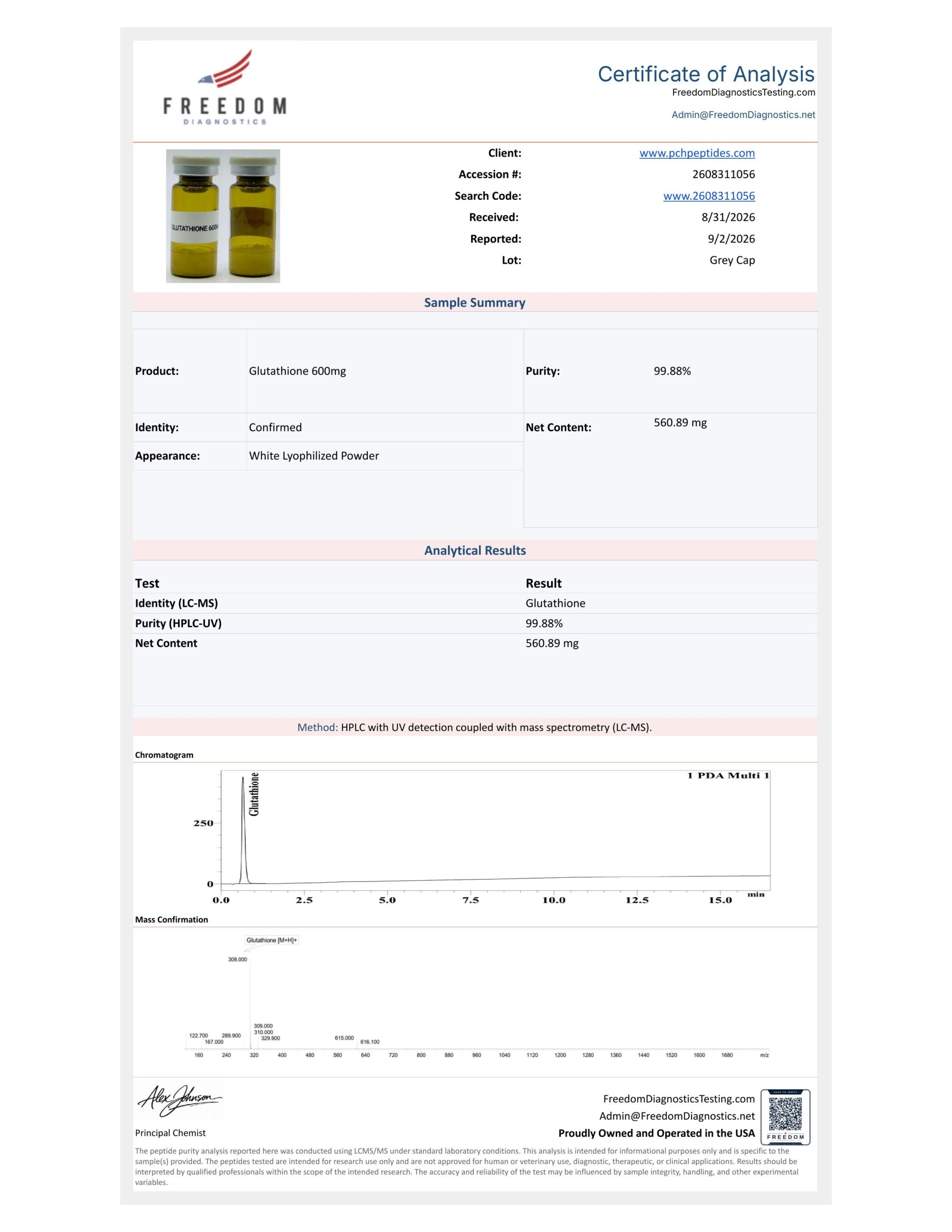
PCH Peptides provides batch-specific analytical documentation for its Glutathione research material.
The PCH Peptides COA Library currently lists one Certificate of Analysis and one endotoxin report for Glutathione.
Researchers should review the applicable COA to confirm the material’s identity, purity and available analytical findings.
The current batch purity percentage should be taken directly from its certificate rather than assumed from general product specifications.
For reduced glutathione, researchers may also need analytical information about oxidation state, depending on the requirements of their laboratory study.
The endotoxin report should be reviewed separately because endotoxin testing and chemical purity testing assess different material characteristics.
For additional information about research material documentation and classification, review the Research Use Only Peptides Guide.
Storage and Handling
Keep the Glutathione vial sealed until required for an authorized laboratory workflow.
Reduced glutathione (GSH) can undergo oxidation to form glutathione disulfide (GSSG), particularly under conditions that promote oxidative reactions.
Exposure to air, moisture, elevated temperatures and unsuitable storage conditions may affect material stability.
Store the lyophilized powder in a cold, dry environment protected from direct light, following the storage temperature and handling instructions provided on the product label.
Maintain appropriate laboratory handling procedures to minimize unnecessary exposure to environmental conditions that may affect the compound’s oxidation state.
Do not use material from containers with damaged packaging, broken seals or uncertain identification.
Researchers should follow the applicable batch-specific documentation when assessing material stability and suitability for laboratory investigations.
Related Research Materials
Laboratories investigating cellular redox chemistry, mitochondrial processes and biochemical signalling may also examine other compounds associated with these research areas.
- NAD+ – Nicotinamide adenine dinucleotide is a redox-active coenzyme investigated in cellular energy metabolism, electron-transfer reactions and enzyme function. Its role in oxidation-reduction chemistry makes it relevant to comparative biochemical research involving glutathione.
- SS-31 – A synthetic tetrapeptide investigated in laboratory models involving mitochondrial membrane chemistry, cardiolipin interactions and mitochondrial-associated molecular processes.
Although these compounds have different molecular structures and mechanisms, they are studied in overlapping areas of biochemical and cellular research.
Researchers can explore additional materials through the PCH Peptides research catalog.
Frequently Asked Questions
Is this reduced glutathione (GSH)?
The product is described as reduced L-glutathione, commonly abbreviated as GSH.
Reduced glutathione has the molecular formula C10H17N3O6S and an approximate molecular weight of 307.3 g/mol.
Researchers should verify the compound identity and applicable specifications against the current batch Certificate of Analysis.
What is glutathione used for in research?
Glutathione is used in laboratory investigations involving redox chemistry, oxidative stress, thiol-dependent biochemical reactions and glutathione-associated enzyme activity.
It is also studied in cell-culture models examining cellular redox status, molecular signalling and changes in the balance between reduced and oxidized glutathione.
What is the difference between GSH and GSSG?
GSH refers to reduced glutathione, which contains a free thiol group on its cysteine residue.
GSSG refers to oxidized glutathione, in which two glutathione molecules are connected through a disulfide bond.
Researchers study the relationship between these two forms to investigate oxidation-reduction reactions and cellular redox conditions.
What is the amino acid structure of glutathione?
Glutathione consists of glutamate, cysteine and glycine.
Its structure is gamma-L-glutamyl-L-cysteinyl-glycine, commonly written as gamma-L-Glu-L-Cys-Gly.
The gamma-glutamyl linkage distinguishes glutathione from conventional tripeptides joined entirely through alpha-peptide bonds.
What is the molecular weight of glutathione?
Reduced glutathione has an approximate molecular weight of 307.3 g/mol.
Its molecular formula is C10H17N3O6S.
These specifications refer to the reduced form of glutathione rather than oxidized glutathione disulfide.
What size does Glutathione come in?
PCH Peptides supplies Glutathione as a 600mg lyophilized research material in a single vial.
The product is intended exclusively for laboratory, academic and institutional research applications.
Is Glutathione batch tested?
The PCH Peptides COA Library lists one Certificate of Analysis and one endotoxin report for Glutathione.
Researchers should review the applicable batch documentation to confirm identity, purity and available analytical testing results.
The documentation is accessible through the COA Library.
How should glutathione be stored?
Reduced glutathione should remain sealed and protected from moisture, excessive heat and direct light.
Because GSH can oxidize to GSSG, appropriate storage conditions are important for maintaining its chemical integrity.
Follow the temperature recommendations provided on the product label and any applicable batch-specific documentation.
Is Glutathione intended for human or animal use?
No. This Glutathione product is supplied strictly for laboratory, academic and institutional research.
It is not intended for human or animal consumption, injection, therapeutic applications, diagnosis or veterinary use.
For additional information about research-use classifications, review the Research Use Only Peptides Guide.
Do you provide dosage instructions for Glutathione?
No. PCH Peptides does not provide dosage, administration or usage protocols. Glutathione is supplied exclusively for qualified research use only.