Research Use Only Disclaimer
Epithalon is sold strictly for laboratory, academic and institutional research. It is not for human or animal consumption, injection, or any therapeutic, diagnostic or veterinary use. PCH Peptides does not provide dosage, administration or usage guidance.
What Is Epithalon?
Epithalon, also known as Epitalon or AEDG, is a synthetic tetrapeptide composed of four amino acids: alanine, glutamic acid, aspartic acid and glycine.
It was developed as a synthetic analogue associated with epithalamin, a peptide extract derived from the pineal gland. Epithalon is studied in laboratory research involving short regulatory peptides and cellular signalling mechanisms.
Researchers investigate Epithalon in cell-culture models examining telomerase activity, gene expression and cellular ageing. These experimental areas remain subjects of ongoing scientific investigation, and findings from laboratory studies should not be interpreted as evidence of therapeutic effects in humans.
Its relatively simple four-amino-acid structure also makes Epithalon relevant to peptide stability studies, molecular characterization and analytical research.
For an overview of related compounds, explore the list of research peptides, which includes peptides investigated in cellular ageing and molecular signalling research.
Epithalon 10mg Specifications
| Property | Value |
| Also known as | Epitalon, AEDG |
| Peptide type | Synthetic tetrapeptide |
| Sequence | Ala-Glu-Asp-Gly |
| Length | 4 amino acids |
| Molecular formula | C14H22N4O9 |
| Molecular weight | 390.3 g/mol |
| Amount per vial | 10mg |
| Form | Lyophilized powder |
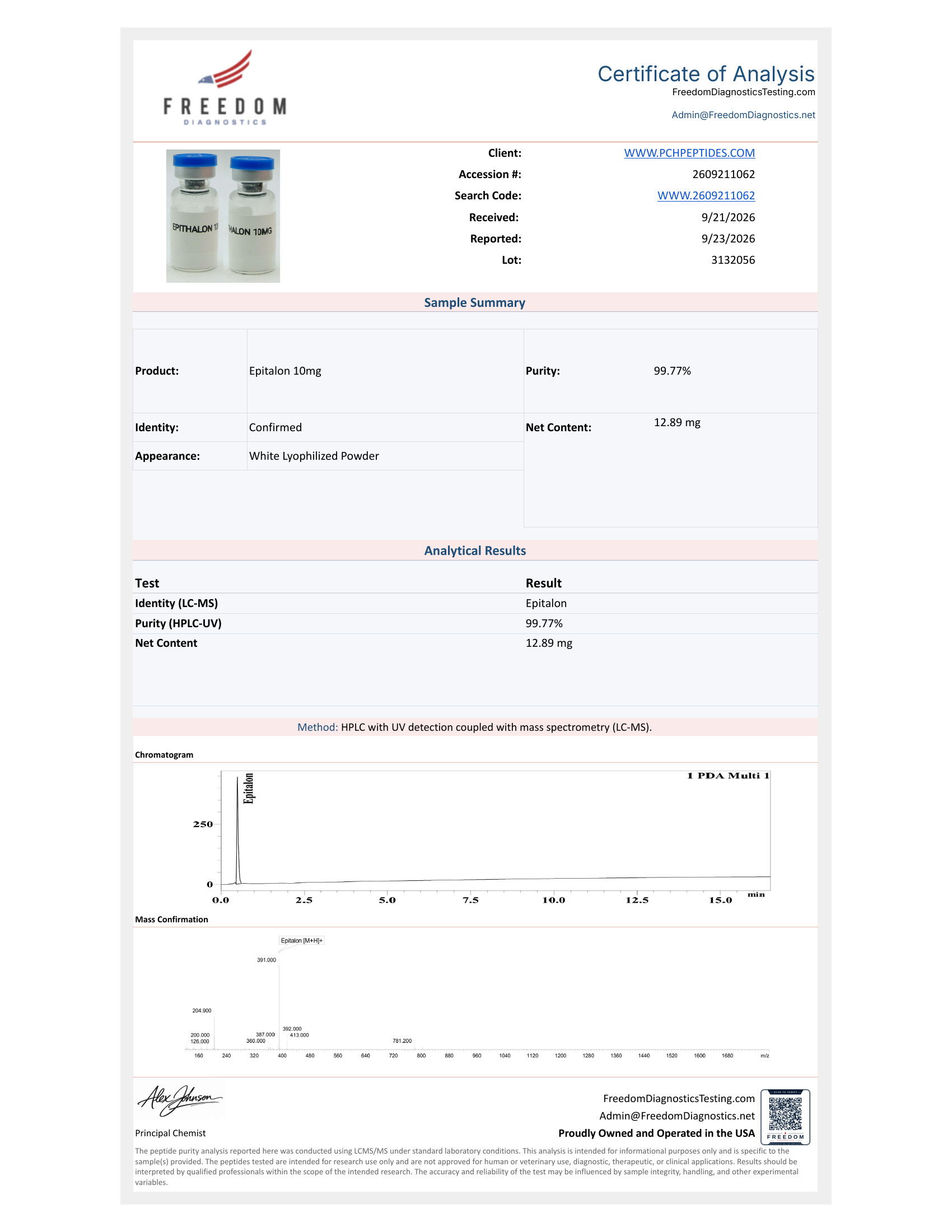
| Purity | 99.77% |
Certificate of Analysis
PCH Peptides states that its research materials undergo batch-specific testing to verify identity and purity before release.
The applicable Epithalon Certificate of Analysis provides analytical information relevant to material characterization and quality assessment.
Researchers should review the current batch documentation to confirm the HPLC purity percentage, compound identity and available analytical findings before conducting laboratory studies.
Available batch testing documentation can be accessed through the PCH Peptides COA Library.
For further information about research material classification and appropriate laboratory applications, researchers can review the Research Use Only Peptides Guide.
Storage and Handling
Keep the Epithalon vial sealed until it is required for an authorized laboratory workflow. Store it in a cold, dry environment, protected from direct light and moisture, following the temperature recommendations provided on the product label.
Appropriate storage conditions are important for maintaining the integrity and stability of lyophilized research peptides during laboratory handling.
Reconstitution Solution is available separately for suitable laboratory research applications.
Researchers seeking additional information about handling lyophilized peptide materials can review the educational guide on how peptide reconstitution works.
Related Research Materials
Laboratories investigating short regulatory peptides, cellular signalling and molecular stability may also examine other research compounds associated with these areas of study.
- Pinealon – A synthetic tripeptide investigated in short-peptide chemistry, cellular signalling and molecular stability research.
- Thymosin Alpha-1 – A synthetic peptide studied in laboratory models involving immune-related cellular signalling and molecular interactions.
- NAD+ – A naturally occurring coenzyme investigated in cellular energy metabolism, redox reactions and ageing-related laboratory research.
These materials represent different molecular structures and research pathways, making them relevant to comparative laboratory investigations.
Browse the complete PCH Peptides research peptide catalog to explore additional compounds available for academic and institutional research.
Frequently Asked Questions
Is Epithalon the same as Epitalon?
Yes. Epithalon and Epitalon are alternative spellings of the same synthetic tetrapeptide. The compound is also commonly identified by its four-amino-acid sequence, Ala-Glu-Asp-Gly, abbreviated as AEDG.
What is Epithalon used for in research?
Epithalon is investigated in laboratory studies involving telomerase activity, gene expression, cellular ageing models and short-peptide signalling mechanisms.
Researchers also examine its structural properties, molecular stability and interactions in controlled cell-culture experiments.
These research applications do not establish clinical effectiveness or safety for human use.
What is the amino acid sequence of Epithalon?
Epithalon consists of four amino acids arranged in the sequence Ala-Glu-Asp-Gly.
This sequence is also abbreviated as AEDG, representing alanine, glutamic acid, aspartic acid and glycine.
What is the molecular weight of Epithalon?
Epithalon has an approximate molecular weight of 390.3 g/mol and a molecular formula of C14H22N4O9.
Its relatively small molecular structure makes it relevant to laboratory studies involving short-peptide characterization and analytical methods.
What size does Epithalon come in?
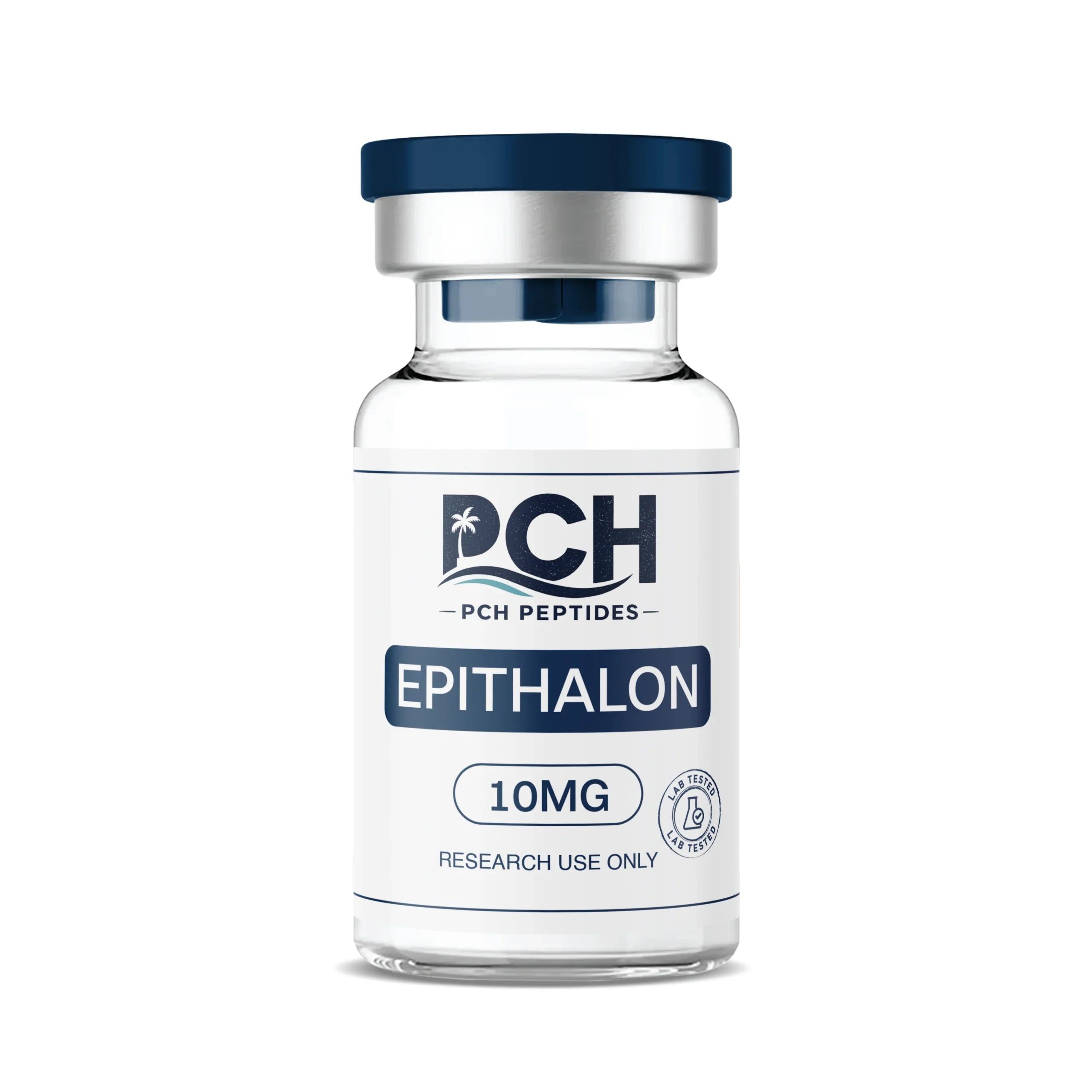
PCH Peptides supplies Epithalon as a 10mg lyophilized research material in a single vial.
The product is intended for qualified laboratory, academic and institutional research applications only.
Is Epithalon third-party tested?
PCH Peptides states that its research materials undergo batch-specific identity and purity testing.
Researchers should review the applicable Certificate of Analysis to verify the purity percentage and analytical findings associated with their batch.
Available testing documentation can be reviewed through the COA Library.
How should Epithalon be stored?
Epithalon should be kept sealed and protected from moisture, excessive heat and direct light.
Follow the storage temperature and handling recommendations provided on the product label and any applicable batch-specific documentation.
Is Epithalon intended for human use?
No. Epithalon is supplied strictly for laboratory, academic and institutional research. It is not intended for human or animal consumption, injection, therapeutic applications, diagnosis or veterinary use.
For additional information about research-use classifications, read the Research Use Only Peptides Guide.
Do you provide dosage instructions for Epithalon?
No. PCH Peptides does not provide dosage, administration or usage protocols. Epithalon is supplied exclusively for qualified research use only.