
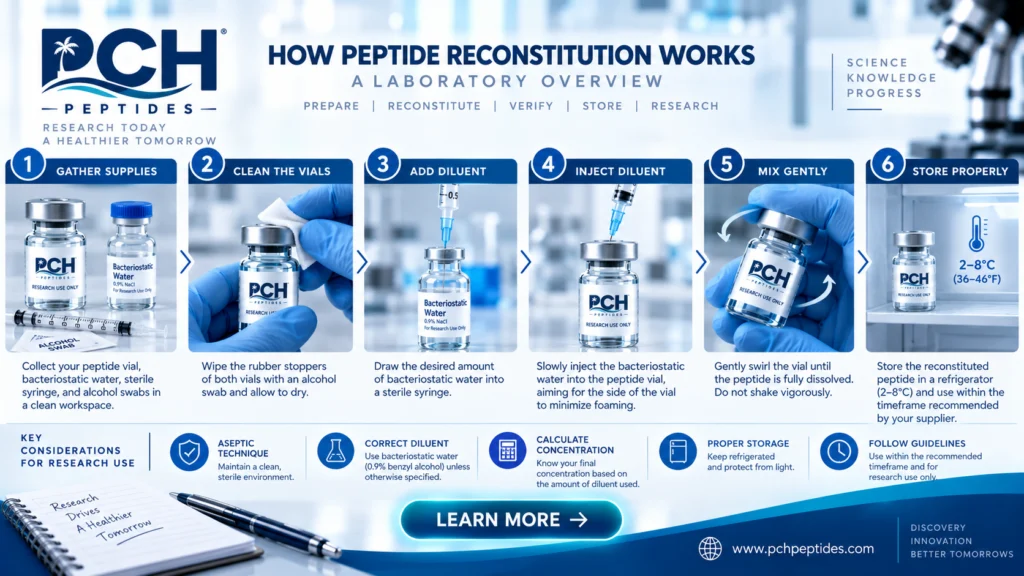
Peptide reconstitution is one of the first practical steps any researcher encounters when working with lyophilized compounds. This guide walks through what reconstitution actually is, why it’s necessary, and the general laboratory principles behind the process, without providing specific dosing or volume instructions tied to any individual compound.
What Is Peptide Reconstitution
Peptide reconstitution refers to the process of converting a freeze-dried, lyophilized peptide back into a liquid form so it can be measured, handled, and studied accurately in a laboratory setting. Peptides are typically shipped and stored in a lyophilized state because this significantly extends shelf life and stability compared to a liquid solution.
Why Peptides Are Lyophilized in the First Place
Lyophilization, commonly known as freeze-drying, removes water from a compound while preserving its molecular structure. This process makes peptides considerably more stable during storage and transport, which is why nearly every research peptide arrives in this freeze-dried form rather than pre-dissolved.
The Basic Goal of Reconstitution
The purpose of reconstitution is straightforward: rehydrate the lyophilized peptide using a sterile diluent, bringing it into a liquid solution that can then be measured and used within a laboratory workflow. The specific diluent, technique, and handling conditions all play a role in how successfully this process preserves the compound’s integrity.
The Science Behind Peptide Reconstitution
Peptide research reconstitution is grounded in basic laboratory chemistry, but a few core principles are worth understanding regardless of which specific compound is being studied.
How Diluents Interact With Lyophilized Material
When a sterile diluent is introduced into a vial containing a lyophilized peptide, the water molecules gradually rehydrate the freeze-dried material, bringing it back into solution. This process should generally be done gently, since aggressive mixing or shaking can affect the structural integrity of certain peptides.
Why Diluent Choice Matters
Not all diluents are appropriate for peptide reconstitution. Sterile water without a preservative is typically intended for single use, while a preserved diluent, often referred to as bacteriostatic water, allows a single vial to be accessed multiple times across a research project without the same contamination risk. For a deeper explanation of this specific diluent, see our guide on what a reconstitution solution is and how it’s used in laboratory settings.
General Steps Involved in Reconstitution
While exact volumes and ratios vary by compound and by laboratory protocol, and PCH Peptides does not provide specific dosing calculations for any product, the general conceptual steps involved in reconstitution follow a consistent laboratory pattern.
Preparing a Sterile Work Environment
Reconstitution should always take place in a clean, controlled laboratory setting, using sterile equipment and materials. This helps reduce the risk of contamination introduced during the process itself, which could compromise the accuracy of any subsequent research.
Introducing the Diluent Gradually
Rather than injecting a diluent forcefully into a lyophilized vial, laboratory best practice generally involves introducing it slowly, allowing the liquid to run down the side of the vial rather than striking the peptide material directly. This gentler approach helps preserve the compound’s structure during rehydration.
Allowing the Solution to Settle
After the diluent has been introduced, allowing the vial to sit undisturbed for a period of time, rather than immediately shaking it, helps the peptide dissolve naturally. Gentle swirling, rather than vigorous shaking, is generally preferred once initial dissolution has occurred.
Factors That Affect Reconstitution Success
Several variables influence how well a peptide reconstitutes and how stable the resulting solution remains.
Temperature Considerations
Reconstitution is typically performed at room temperature or with a diluent brought to room temperature, since extreme temperature differences can affect how smoothly a peptide dissolves.
Peptide Solubility Characteristics
Different peptides have different solubility profiles depending on their amino acid sequence and overall structure. Some compounds dissolve quickly and easily, while others may require more time or gentler handling to fully reconstitute.
Storage After Reconstitution
Once a peptide has been reconstituted, proper storage becomes critical to maintaining its stability throughout a research project.
- Store reconstituted solutions in a refrigerator between uses
- Keep vials sealed and protected from light
- Avoid repeated temperature fluctuations
- Follow any batch-specific storage guidance provided with the product
Common Mistakes in Peptide Reconstitution
Understanding common errors can help researchers avoid compromising their materials before a study even begins.
Using the Wrong Diluent
Using an inappropriate diluent, or one not intended for peptide reconstitution, can introduce contamination risk or affect compound stability. Sterile, purpose-appropriate diluents should always be used.
Aggressive Mixing
Shaking a vial vigorously to speed up dissolution can damage the structural integrity of certain peptides. Gentle handling throughout the process helps preserve the compound’s intended structure.
Skipping Documentation Review
Before reconstituting any compound, reviewing the batch-specific Certificate of Analysis helps confirm the material’s identity and purity, giving researchers confidence in what they’re actually working with before beginning the reconstitution process.
Applying This to Your Research Materials
Understanding peptide reconstitution at a conceptual level is a useful starting point, but specific handling should always follow your own institution’s established laboratory protocols, since exact procedures can vary by compound and by research application.
Sourcing Materials for Reconstitution
Researchers working with lyophilized compounds like BPC-157, CJC-1295 No DAC, or MOTS-C can review batch-specific documentation for each through the COA Library before beginning any laboratory work. The full range of research peptides is available through PCH Peptides, each supplied with the same documentation standards.
Where to Learn More
For a broader understanding of how research use only classification applies to laboratory materials generally, see our guide on RUO peptides, or explore our list of commonly studied research peptides to compare compounds relevant to your research.
Research Use Only Disclaimer
This article is provided for general educational purposes only and describes reconstitution at a conceptual laboratory level. It does not provide specific dosing calculations, reconstitution ratios, or administration guidance for any compound. All products sold by PCH Peptides are supplied strictly for laboratory, academic, or institutional research purposes and are not intended for human or animal consumption, injection, or any therapeutic use. Researchers should follow their own institution’s established laboratory protocols for specific reconstitution procedures.
Frequently Asked Questions
What is peptide reconstitution?
Peptide reconstitution is the process of converting a freeze-dried, lyophilized peptide back into liquid form using a sterile diluent, so it can be measured and studied in a laboratory setting.
Why are peptides shipped in a lyophilized form?
Lyophilization, or freeze-drying, significantly extends a peptide’s shelf life and stability compared to storing it as a liquid solution.
What diluent is used for peptide reconstitution?
A sterile diluent, often a preserved solution sometimes called bacteriostatic water, is commonly used, since it allows a single vial to be accessed multiple times without added contamination risk.
Does PCH Peptides provide reconstitution ratios or dosing instructions?
No. PCH Peptides does not provide specific dosing calculations or reconstitution ratios for any compound. Researchers should follow their own institution’s laboratory protocols.
What is the most common mistake made during reconstitution?
Aggressive shaking or mixing is a common mistake, since it can affect the structural integrity of certain peptides. Gentle handling is generally recommended.
How should a reconstituted peptide be stored?
Reconstituted solutions should generally be refrigerated, kept sealed, protected from light, and used in accordance with any batch-specific storage documentation provided.