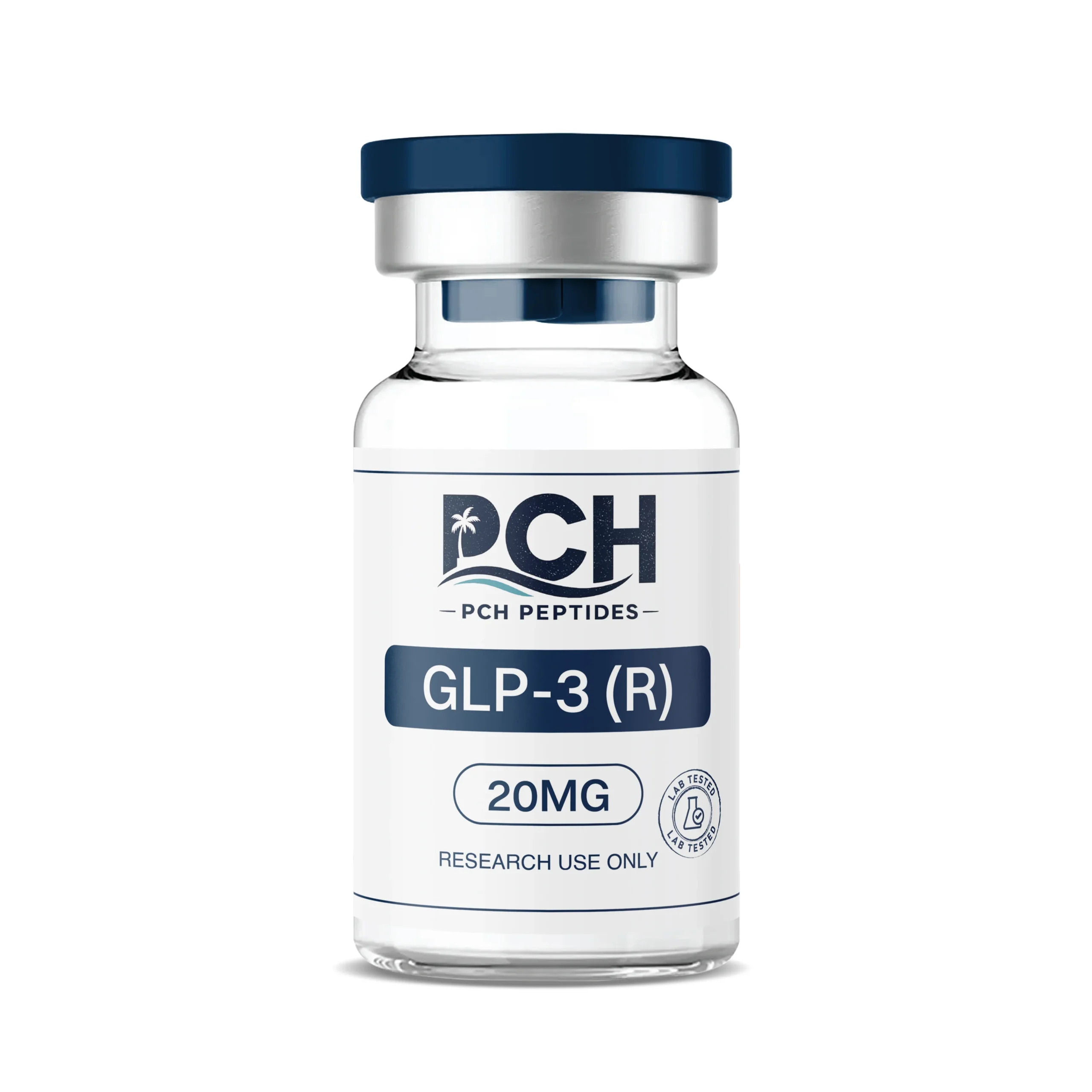
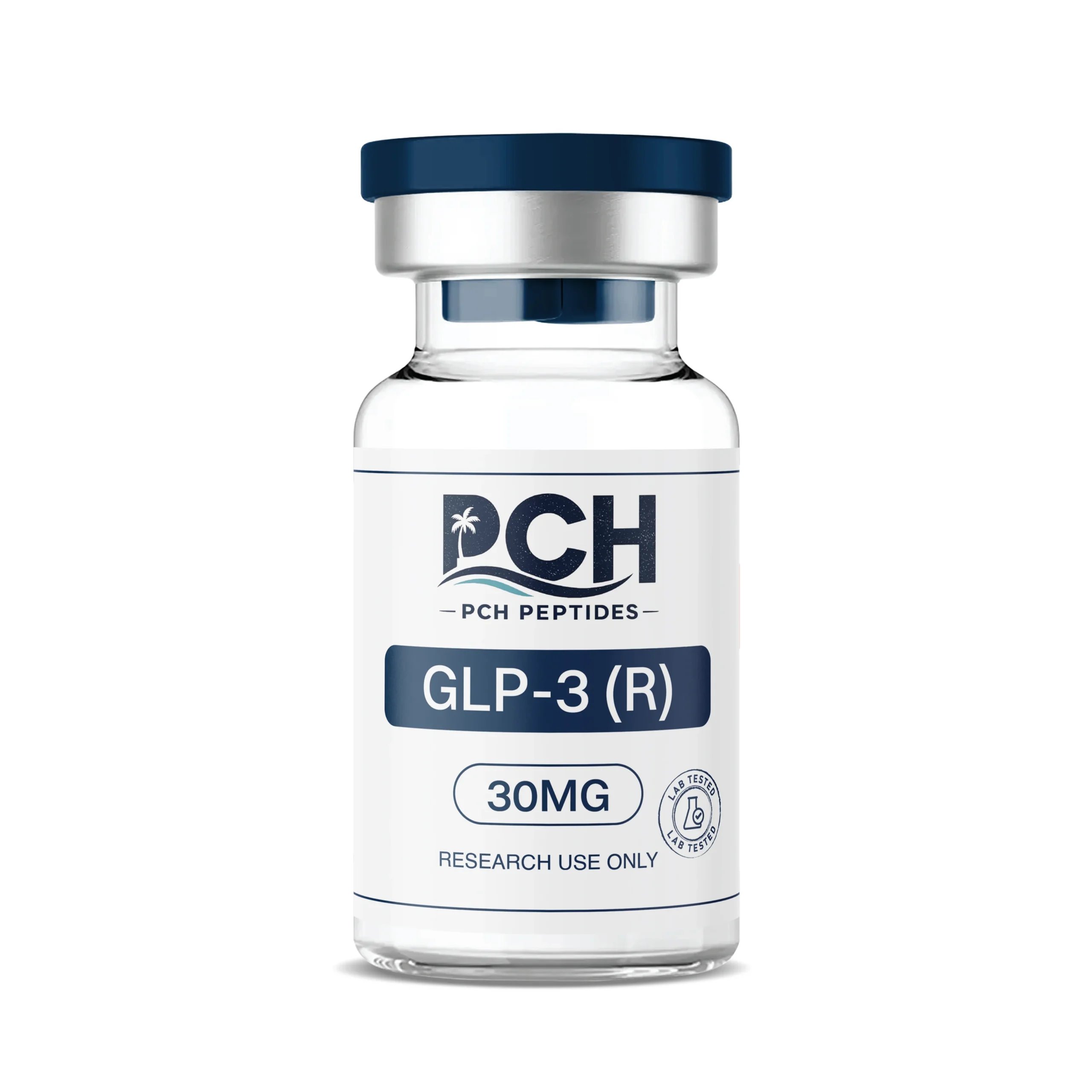
Research Use Only Disclaimer
GLP-3 (R) is listed strictly for laboratory, academic and institutional research. It is not intended for human or animal consumption, injection, or any therapeutic, diagnostic or veterinary use. PCH Peptides does not provide dosage, administration or usage guidance.
Retatrutide is an investigational pharmaceutical compound. Research-use-only labeling does not establish regulatory authorization to market or distribute it.
What Is GLP-3 (R)?
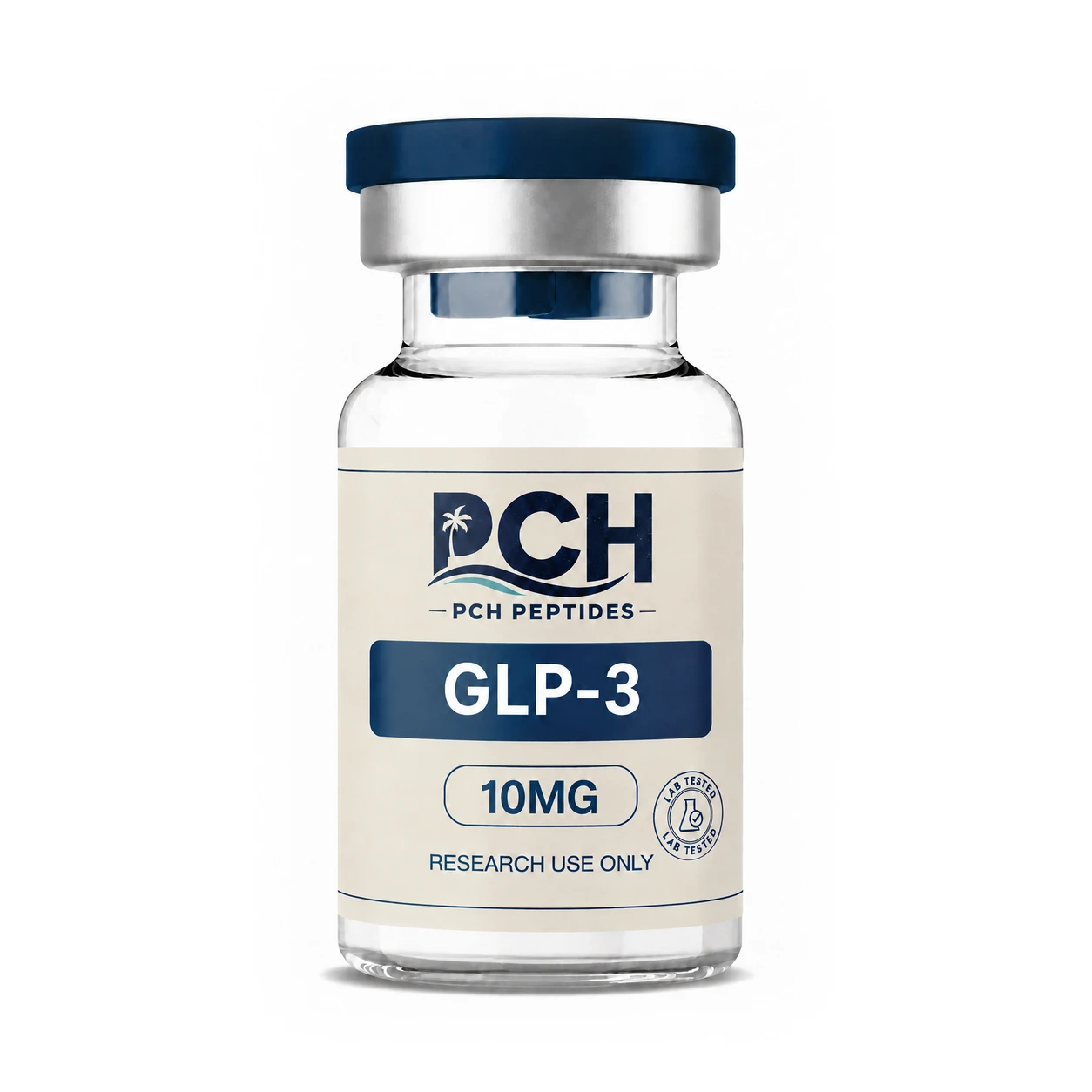
GLP-3 (R) is the catalog name used by PCH Peptides for Retatrutide, a synthetic lipidated peptide designed to interact with three distinct receptor systems.
Retatrutide is characterized as a single-molecule triple agonist with activity at the glucose-dependent insulinotropic polypeptide (GIP) receptor, glucagon-like peptide-1 (GLP-1) receptor and glucagon receptor.
Unlike formulations that combine multiple peptide compounds, Retatrutide contains these receptor-interaction properties within a single molecular structure.
Its lipidated structure is associated with the compound’s pharmacological characteristics and distinguishes it from naturally occurring peptide hormones.
Researchers investigate Retatrutide in biochemical and molecular studies involving receptor binding, ligand-receptor interactions, peptide characterization and multi-receptor signalling.
Its triple-receptor profile makes it relevant to comparative research alongside dual-receptor compounds such as GLP-2 (T).
For additional educational information about peptide structures and classifications, explore the What Are Peptides? Research Guide.
GLP-3 (R) Specifications
Property | Value |
Product name | GLP-3 (R) |
Compound | Retatrutide |
Peptide type | Synthetic lipidated triple-receptor agonist |
Receptor targets | GIP, GLP-1 and glucagon receptors |
Molecular formula | C221H342N46O68 |
Molecular weight | Approximately 4731.3 g/mol |
Available sizes | 10mg, 20mg and 30mg |
Form | Lyophilized powder |
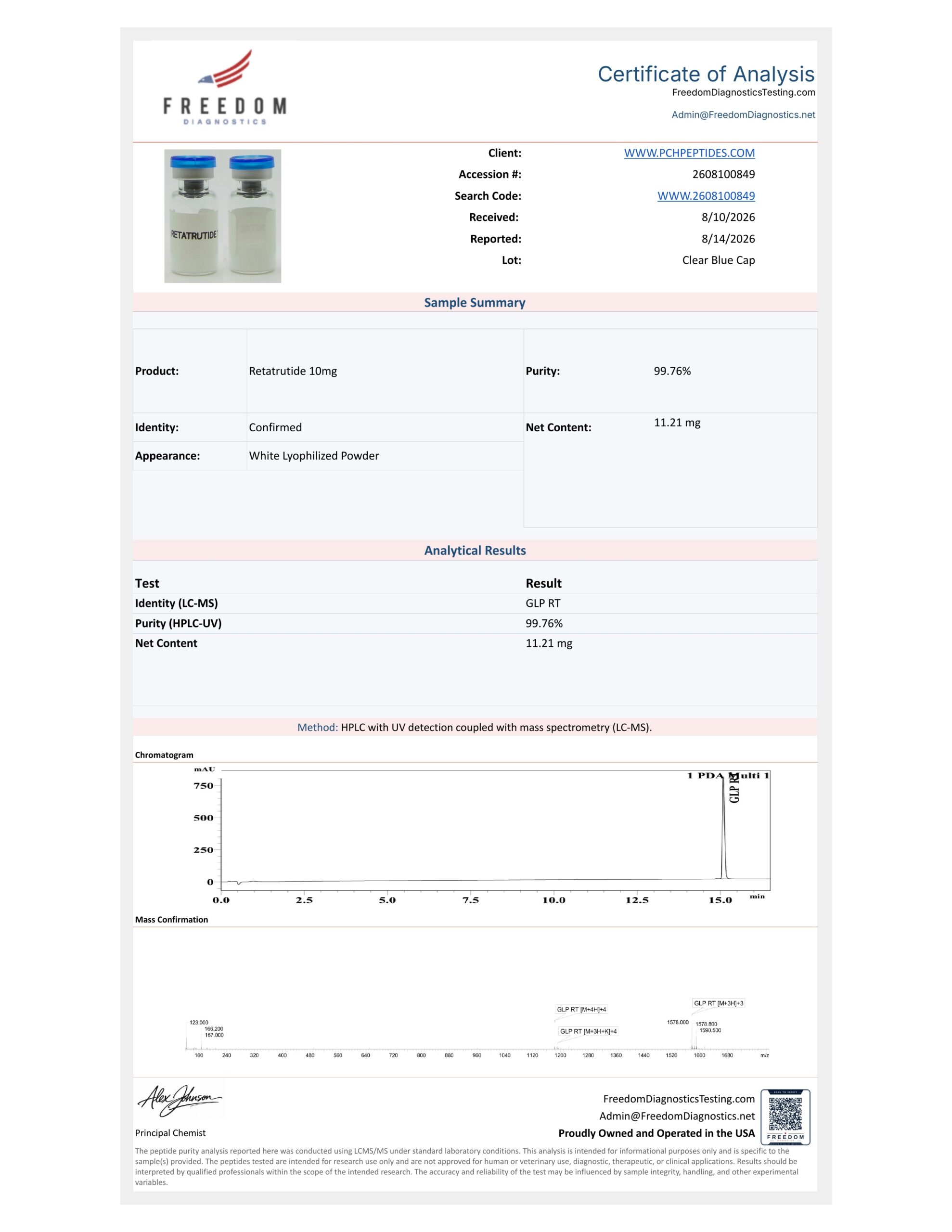
Reported 10mg batch purity | 99.76% |
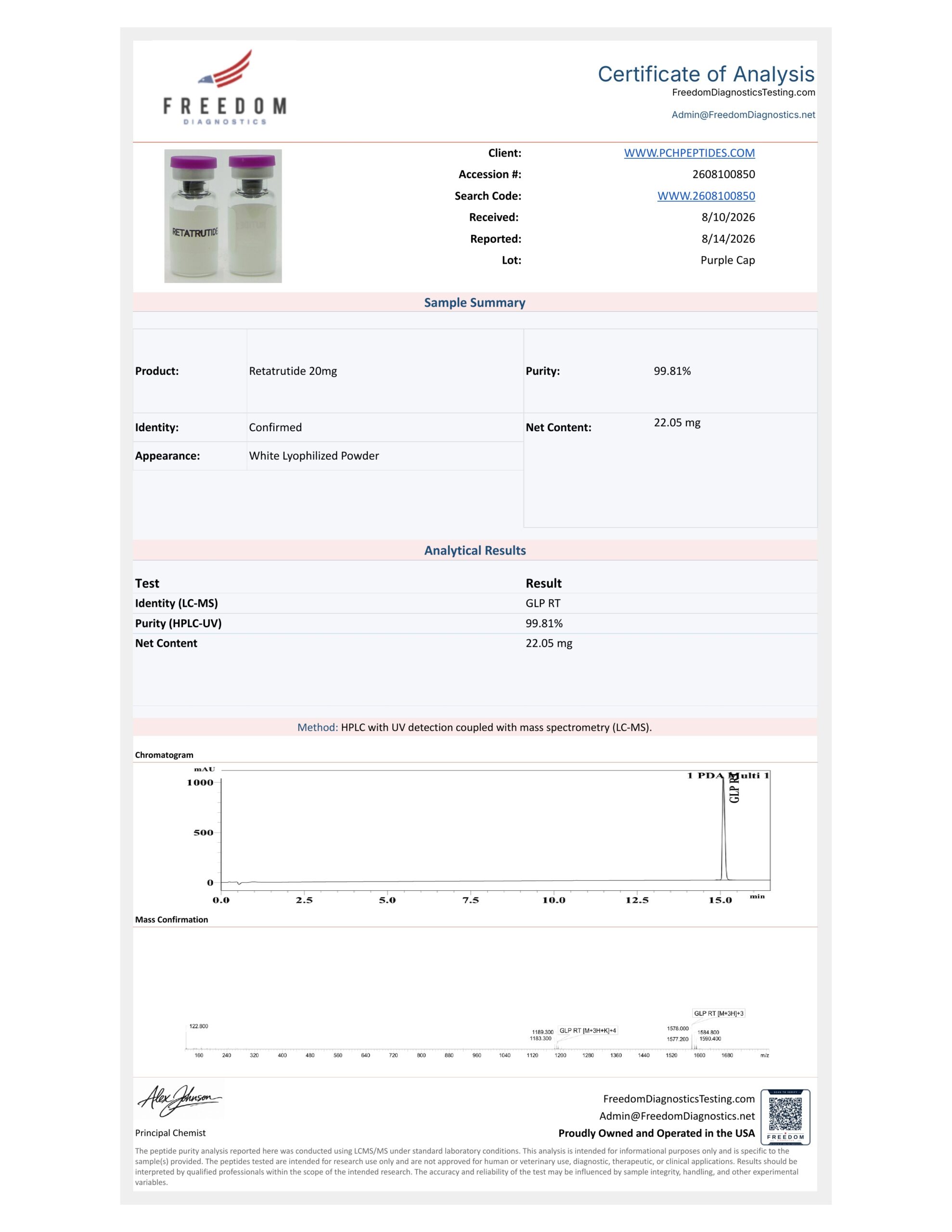
Reported 20mg batch purity | 99.81% |
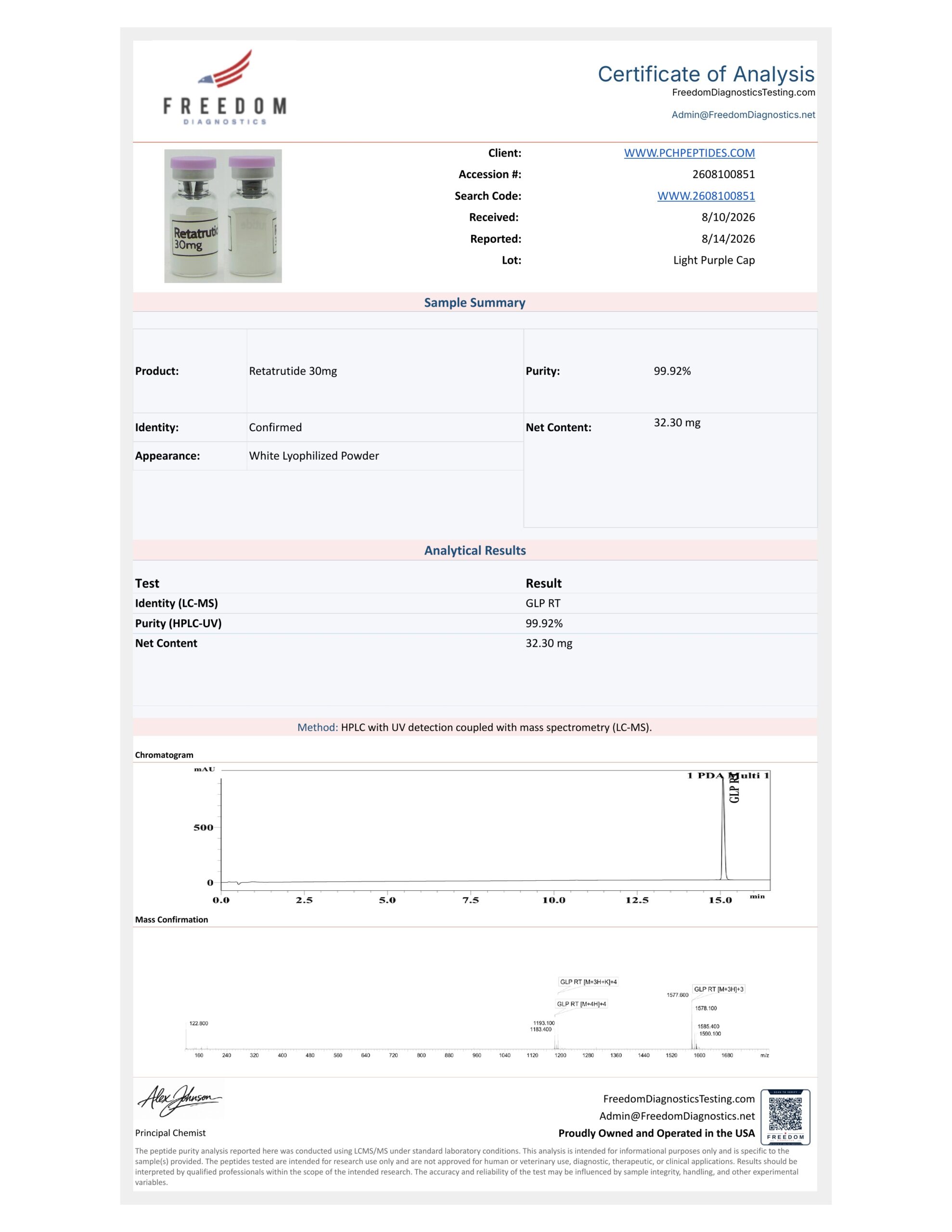
Reported 30mg batch purity | 99.92% |
GLP-3 (R) 10mg Research Configuration
The GLP-3 (R) 10mg configuration contains a nominal 10mg of lyophilized Retatrutide research material per vial.
This configuration is listed for non-clinical laboratory investigations involving molecular characterization, peptide stability and receptor-interaction models.
The supplied batch documentation should be reviewed to confirm material identity, reported purity and analytical specifications.
The submitted purity figure for this configuration is 99.76% by HPLC, pending confirmation against its corresponding COA.
GLP-3 (R) 20mg Research Configuration
The GLP-3 (R) 20mg configuration contains a nominal 20mg of lyophilized Retatrutide research material.
It contains the same identified compound as the 10mg configuration, with a different nominal quantity per vial.
Researchers should consult the applicable batch-specific Certificate of Analysis for analytical details.
The submitted HPLC purity figure for the 20mg configuration is 99.81%, subject to verification.
GLP-3 (R) 30mg Research Configuration
The GLP-3 (R) 30mg configuration contains a nominal 30mg of lyophilized Retatrutide research material.
Like the other listed sizes, it is intended for controlled laboratory research and analytical investigation.
The submitted batch purity is 99.92% by HPLC. This value should be checked against the corresponding 30mg COA before publication.
GLP-3 (R) Receptor Research
Retatrutide is investigated for its interaction with three receptor systems involved in peptide-mediated cellular signalling.
GIP Receptor Interaction
The glucose-dependent insulinotropic polypeptide receptor is a G protein-coupled receptor associated with incretin signalling.
Researchers examine Retatrutide’s interaction with this receptor through biochemical assays, receptor-binding investigations and molecular characterization.
Experimental work may evaluate ligand affinity, receptor activation and downstream signalling responses.
GLP-1 Receptor Interaction
The glucagon-like peptide-1 receptor is another G protein-coupled receptor involved in incretin-related signalling.
Retatrutide’s GLP-1 receptor activity is investigated in controlled laboratory models involving ligand-receptor binding and cellular signalling pathways.
Researchers may compare its receptor-interaction profile with compounds designed for GLP-1 receptor agonism.
Glucagon Receptor Interaction
The glucagon receptor is a G protein-coupled receptor associated with glucagon-mediated cellular signalling.
Its inclusion in Retatrutide’s receptor profile distinguishes the compound from dual GIP/GLP-1 receptor agonists.
Laboratory studies investigate this additional receptor interaction through molecular signalling, biochemical characterization and comparative receptor-binding models.
Certificate of Analysis
PCH Peptides maintains batch-specific analytical documentation for its listed research materials.
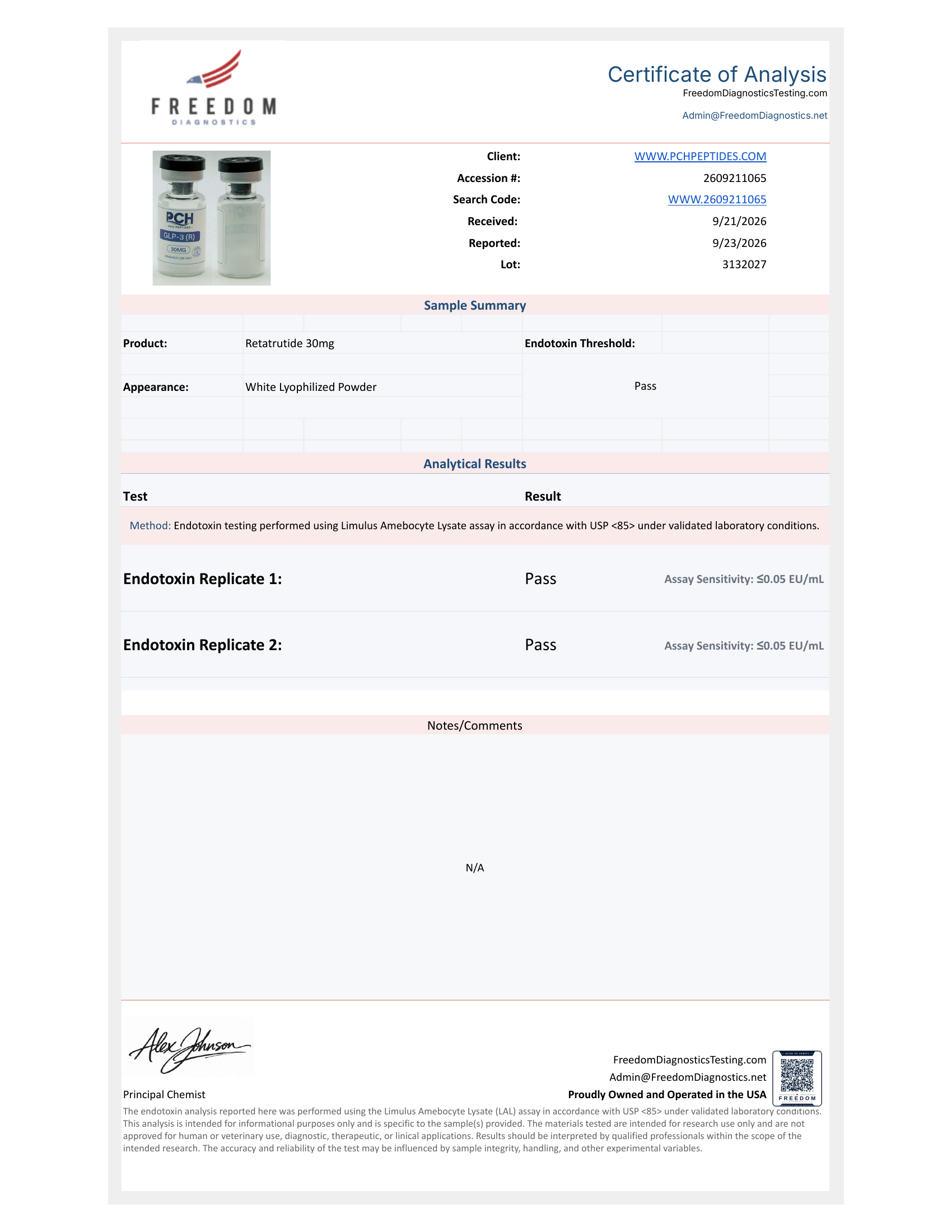
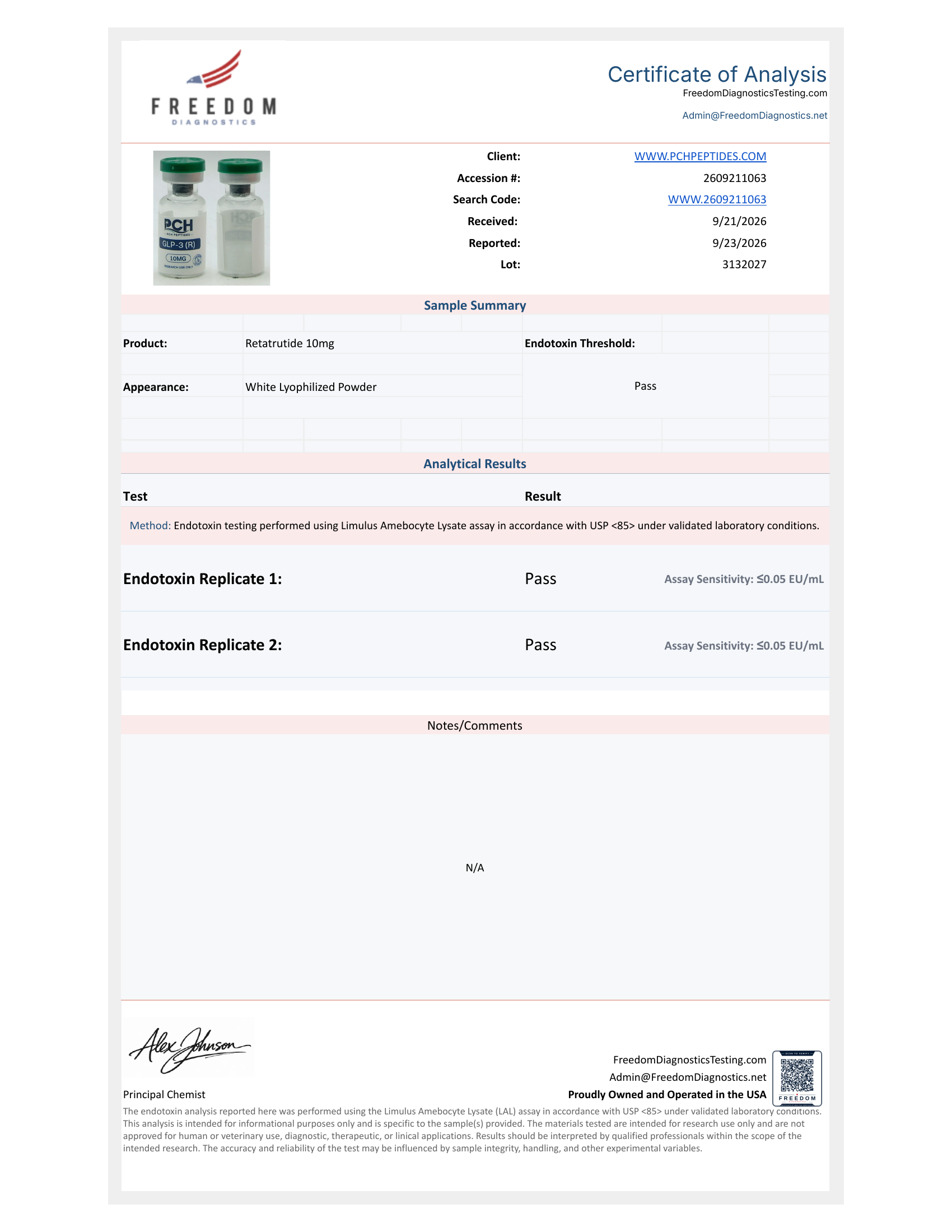
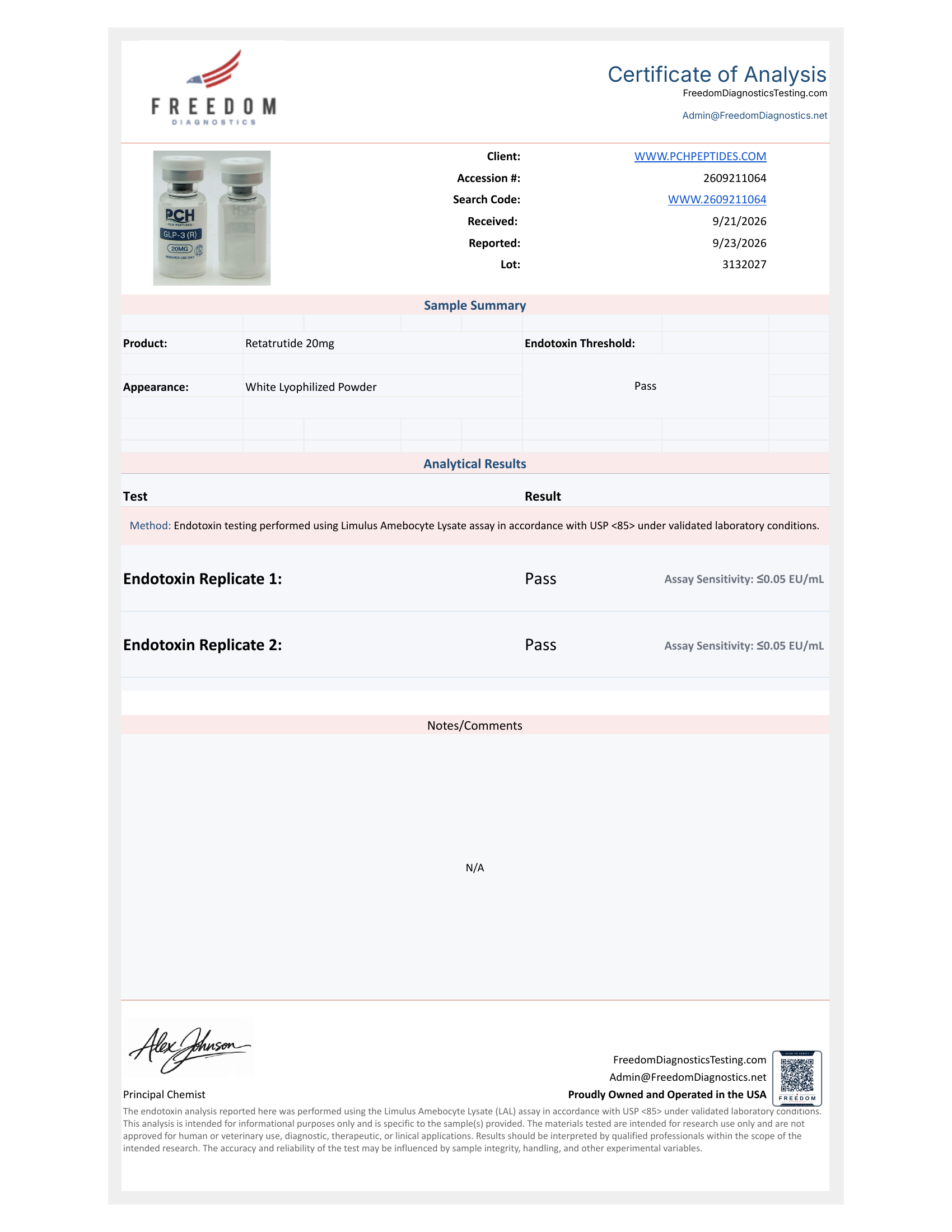
The PCH Peptides COA Library currently lists three Certificates of Analysis and three endotoxin reports for GLP-3 (R).
The submitted HPLC purity figures are:
Configuration | Reported HPLC Purity |
GLP-3 (R) 10mg | 99.76% |
GLP-3 (R) 20mg | 99.81% |
GLP-3 (R) 30mg | 99.92% |
These figures must be matched to the relevant lot numbers and certificates before being presented as verified current-batch results.
Researchers should review the applicable COA to confirm compound identity, analytical purity, batch information and available testing findings.
The accompanying endotoxin documentation should be reviewed separately, as endotoxin testing and HPLC purity measure different aspects of material quality.
For general educational information about analytical documentation and research material classifications, review the Research Use Only Peptides Guide.
Storage and Handling
Keep the GLP-3 (R) vial sealed until required for an authorized laboratory workflow.
Protect the lyophilized material from moisture, excessive heat and direct light. Follow the storage temperature and handling recommendations provided on the product label and applicable batch-specific documentation.
The 10mg, 20mg and 30mg configurations should each be handled according to their corresponding laboratory material specifications.
Do not use material from containers with damaged packaging, broken seals or uncertain identification.
Researchers seeking general information about lyophilized peptide preparation can review the educational article on how peptide reconstitution works.
Related Research Materials
Researchers investigating incretin-receptor signalling and ligand-receptor interactions may compare the molecular characteristics of several related compounds.
- GLP-2 (T) – The catalog name for Tirzepatide, a synthetic peptide with dual agonist activity at GIP and GLP-1 receptors. It differs from Retatrutide by lacking glucagon receptor agonism.
- GLP-1 (S) / Cagri Blend – A two-component formulation containing Semaglutide and Cagrilintide. These compounds interact with GLP-1 and amylin-related receptor systems, respectively.
GLP-3 (R) differs from both because Retatrutide is a single peptide designed to interact with three receptor systems.
These distinctions are relevant to comparative research examining peptide structures, ligand-receptor interactions and molecular signalling.
For broader background on research peptide categories, review the PCH Peptides Research Guide.
Frequently Asked Questions
What is GLP-3 (R)?
GLP-3 (R) is the catalog name used by PCH Peptides for Retatrutide, a synthetic lipidated peptide investigated for triple-receptor agonist activity.
It interacts with the GIP, GLP-1 and glucagon receptors and is studied in biochemical, receptor-binding and molecular signalling research.
What sizes does GLP-3 (R) come in?
The PCH Peptides product page lists three configurations:
- 10mg lyophilized vial
- 20mg lyophilized vial
- 30mg lyophilized vial
Each configuration contains a different nominal amount of the same identified compound.
What purity is GLP-3 (R)?
The submitted batch purity figures are 99.76% for 10mg, 99.81% for 20mg and 99.92% for 30mg, measured by HPLC.
These figures require confirmation against the applicable batch-specific Certificates of Analysis before being treated as verified results.
The COA Library lists three certificates for GLP-3 (R).
Why is GLP-3 (R) called a triple agonist?
Retatrutide is called a triple agonist because a single peptide molecule has agonist activity at three different receptors:
- GIP receptor
- GLP-1 receptor
- Glucagon receptor
This receptor profile distinguishes it from dual agonists that interact with two receptor systems.
How is GLP-3 (R) different from GLP-2 (T)?
GLP-3 (R) refers to Retatrutide, which has agonist activity at GIP, GLP-1 and glucagon receptors.
GLP-2 (T) refers to Tirzepatide, which acts at GIP and GLP-1 receptors.
The primary difference is Retatrutide’s additional glucagon receptor activity.
Is GLP-3 (R) the same as naturally occurring GLP-1 or GLP-2?
No. GLP-3 (R) is a product catalog name referring to Retatrutide.
Naturally occurring GLP-1 and GLP-2 are distinct peptide hormones with different molecular structures and biological functions.
Retatrutide is a synthetic compound designed for interaction with multiple receptor pathways.
What is the molecular weight of GLP-3 (R)?
Retatrutide has an approximate molecular weight of 4731.3 g/mol and a molecular formula of C221H342N46O68.
Researchers can verify the reported molecular specifications through appropriate chemical reference documentation.
Is each GLP-3 (R) size batch tested?
The PCH Peptides COA Library lists three Certificates of Analysis and three endotoxin reports for GLP-3 (R).
Researchers should review the corresponding records to confirm which batch and configuration each report covers.
The presence of three certificates does not by itself establish that every currently shipped vial belongs to one of those documented lots.
How should GLP-3 (R) be stored?
GLP-3 (R) should remain sealed and protected from moisture, excessive heat and direct light.
Follow the storage temperature and handling recommendations provided on the product label and any applicable batch-specific documentation.
Is GLP-3 (R) intended for human use?
No. The PCH Peptides GLP-3 (R) listing describes it strictly as a laboratory research material.
It is not intended for human or animal consumption, injection, diagnosis, treatment or veterinary use.
Retatrutide is an investigational pharmaceutical compound, and research-grade material should not be treated as an approved medication.
For general information about research-use labeling, review the Research Use Only Peptides Guide.
Do you provide dosage instructions for GLP-3 (R)?
No. PCH Peptides does not provide dosage, administration or usage protocols. Its GLP-3 (R) listing is intended for qualified, non-clinical laboratory research only.