Research Use Only Disclaimer
GLP-2 (T) is sold strictly for laboratory, academic and institutional research. It is not for human or animal consumption, injection, or any therapeutic, diagnostic or veterinary use. PCH Peptides does not provide dosage, administration or usage guidance.
What Is GLP-2 (T)?
GLP-2 (T) is the product name used by PCH Peptides for Tirzepatide, a synthetic 39-amino-acid peptide developed to interact with two distinct incretin receptors.
Tirzepatide is based on the glucose-dependent insulinotropic polypeptide (GIP) sequence and contains structural modifications, including a C20 fatty diacid side chain attached through a linker.
These molecular modifications distinguish Tirzepatide from naturally occurring incretin peptides and influence its receptor-binding and pharmacological characteristics.
GLP-2 (T) acts as a dual agonist at the glucose-dependent insulinotropic polypeptide (GIP) receptor and the glucagon-like peptide-1 (GLP-1) receptor.
Because a single peptide molecule interacts with both receptor systems, Tirzepatide is studied in laboratory models involving incretin-receptor binding, ligand-receptor interactions, molecular signalling and peptide stability.
Researchers also compare its dual-receptor activity with other peptide compounds, including GLP-3 (R), which is associated with three receptor pathways.
For additional information about peptide classifications and laboratory research applications, explore the list of research peptides.
GLP-2 (T) Specifications
| Property | Value |
| Product name | GLP-2 (T) |
| Compound | Tirzepatide |
| Peptide type | Synthetic dual GIP/GLP-1 receptor agonist |
| Length | 39 amino acids |
| Structural modification | C20 fatty diacid side chain |
| Receptor targets | GIP receptor and GLP-1 receptor |
| Molecular formula | C225H348N48O68 |
| Molecular weight | Approximately 4813.5 g/mol |
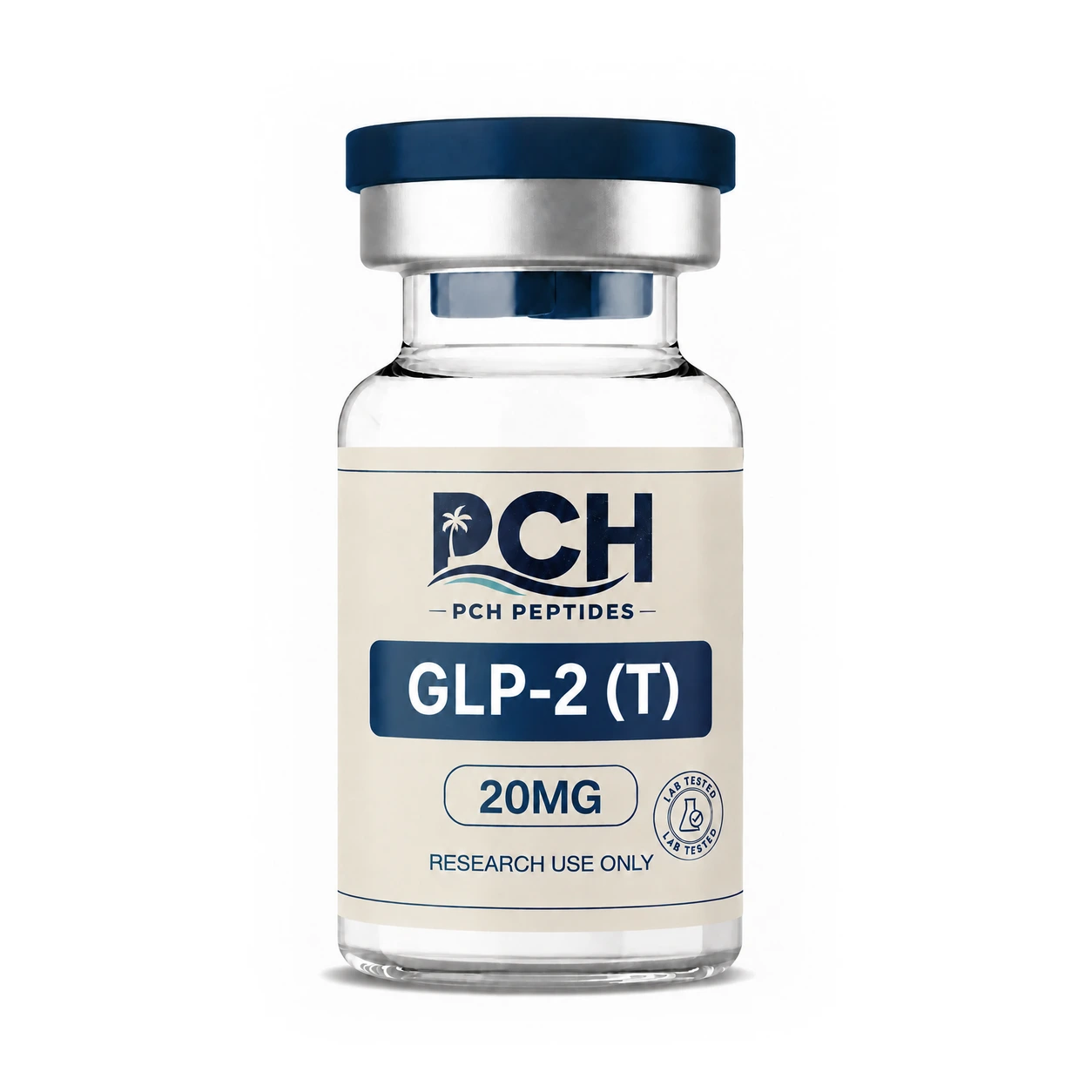
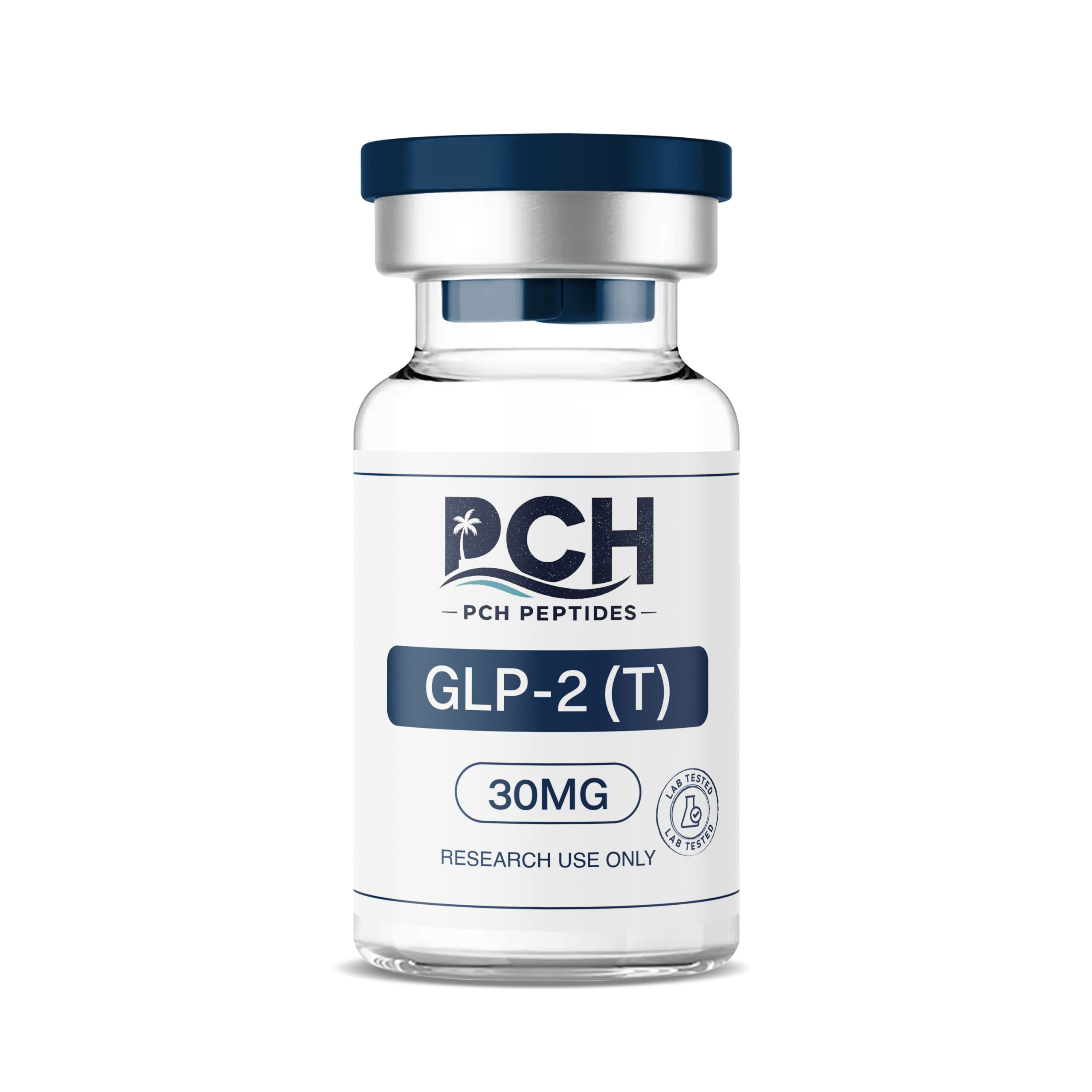
| Available sizes | 20mg and 30mg |
| Form | Lyophilized powder |
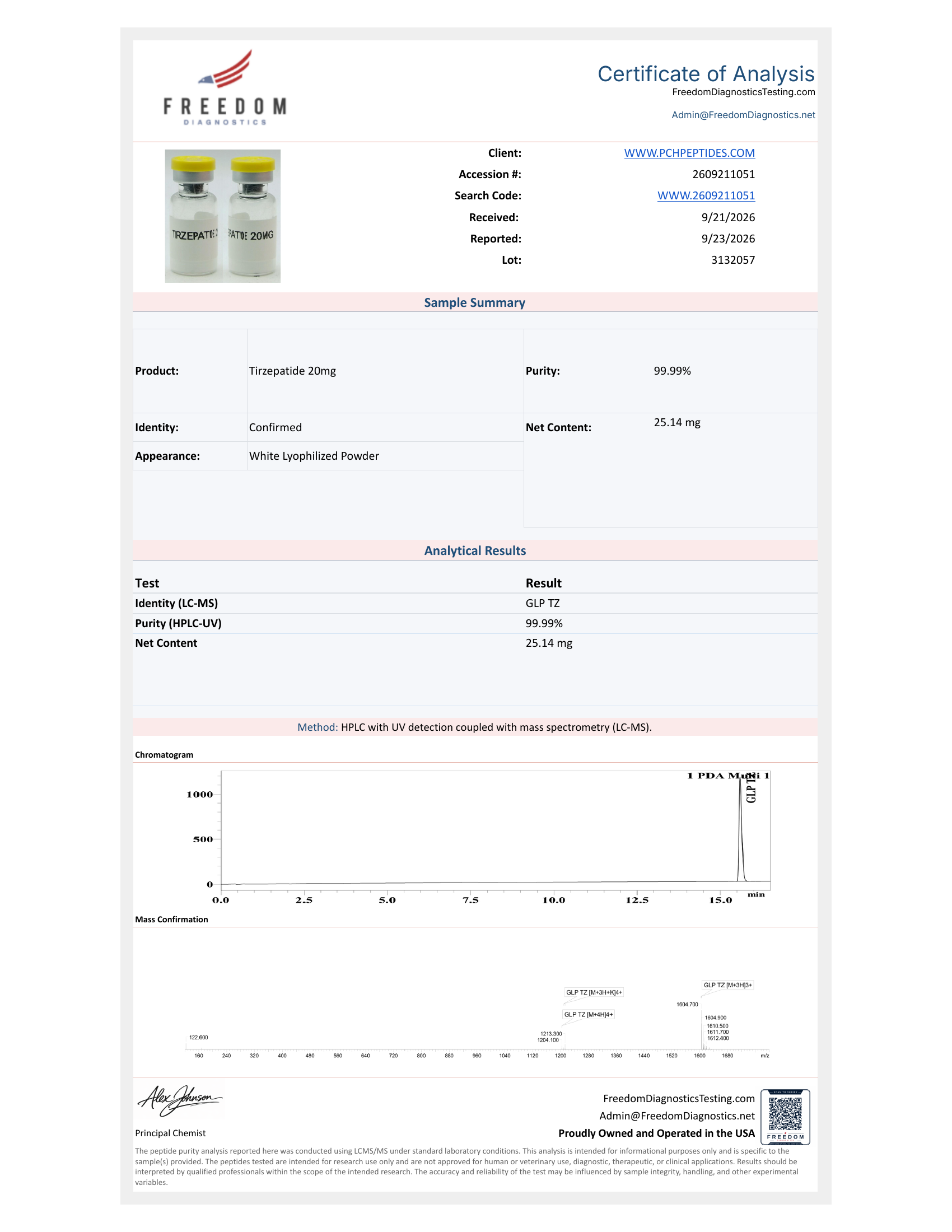
| Purity – 20mg | 99.99% |
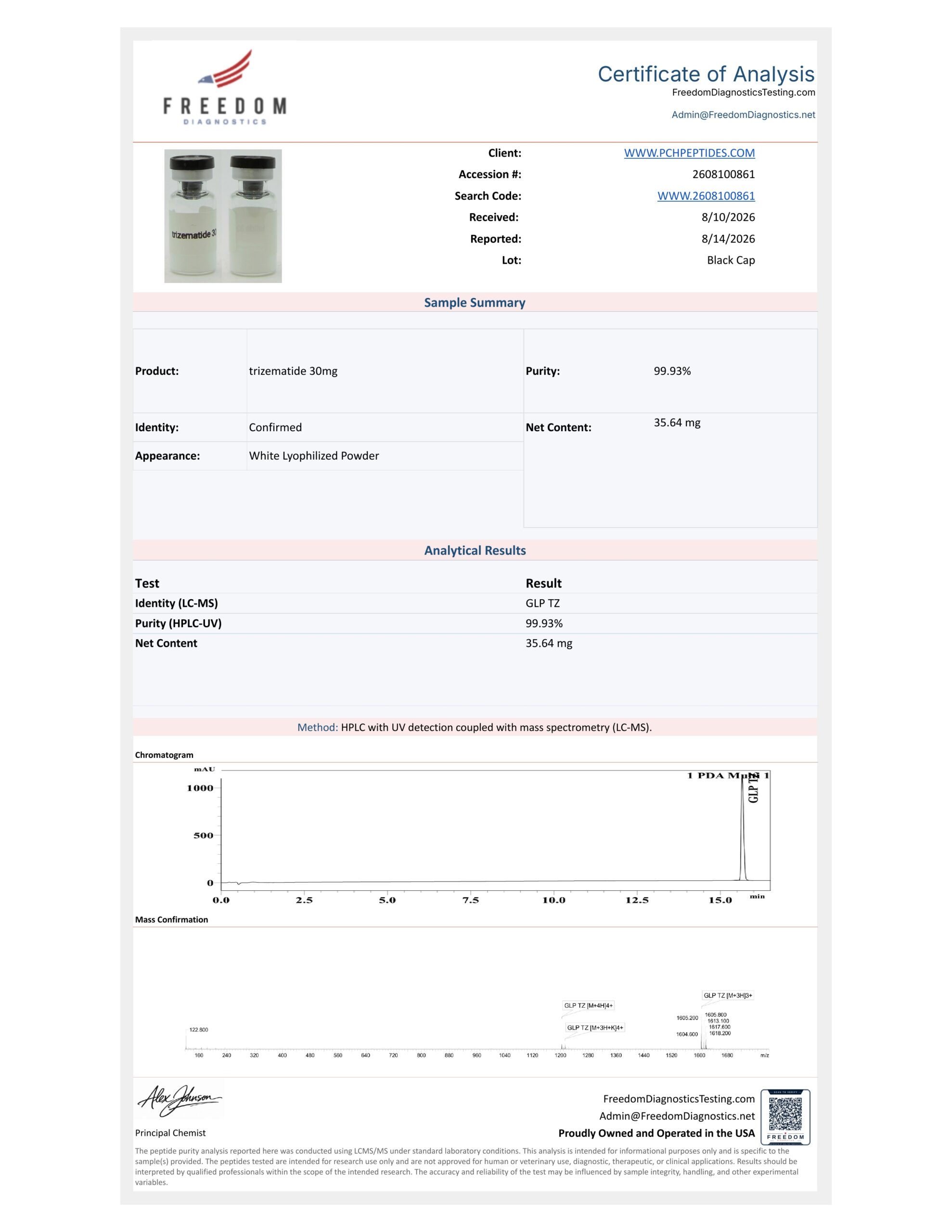
| Purity – 30mg | 99.93% |
GLP-2 (T) 20mg Research Vial
The GLP-2 (T) 20mg configuration contains 20mg of lyophilized Tirzepatide research material in a single vial.
This configuration is intended for qualified laboratory investigations involving peptide characterization, receptor-binding assays and molecular stability studies.
Researchers should consult the applicable batch-specific Certificate of Analysis to verify the material’s identity, analytical purity and additional testing results.
GLP-2 (T) 30mg Research Vial
The GLP-2 (T) 30mg configuration contains 30mg of lyophilized Tirzepatide research material in a single vial.
It contains the same peptide compound as the 20mg configuration, with a different nominal amount of research material per vial.
Both configurations are intended for controlled, non-clinical laboratory investigations.
The corresponding batch documentation should be reviewed independently for applicable analytical findings and quality specifications.
GLP-2 (T) Receptor Research
Tirzepatide is investigated in research involving two distinct receptor systems associated with incretin signalling.
GIP Receptor Interaction
The glucose-dependent insulinotropic polypeptide receptor is a G protein-coupled receptor involved in incretin-related cellular signalling.
Researchers study Tirzepatide’s interactions with this receptor through biochemical assays, molecular modelling and receptor-binding investigations.
Laboratory research may examine ligand affinity, receptor activation and downstream signalling responses under controlled experimental conditions.
GLP-1 Receptor Interaction
The glucagon-like peptide-1 receptor is another G protein-coupled receptor associated with incretin signalling.
Tirzepatide’s ability to interact with the GLP-1 receptor makes it relevant to comparative laboratory studies involving synthetic GLP-1 analogues and related compounds.
Researchers investigate its molecular characteristics, receptor-binding behaviour and signalling activity in cellular research models.
The combination of GIP and GLP-1 receptor agonism within a single molecular structure distinguishes Tirzepatide from peptides designed to interact with only one receptor system.
Certificate of Analysis
PCH Peptides provides batch-specific analytical documentation for GLP-2 (T) research materials.
The PCH Peptides COA Library currently lists two Certificates of Analysis associated with GLP-2 (T).
Researchers should review the applicable certificate for each available configuration to verify the corresponding batch identity, HPLC purity percentage and other analytical findings.
The 20mg and 30mg configurations should be evaluated against their relevant batch records rather than assuming identical purity results.
Available analytical documentation helps laboratories assess research material identity, quality and batch consistency.
For additional information about research material classifications and documentation requirements, review the Research Use Only Peptides Guide.
Storage and Handling
Keep the GLP-2 (T) vial sealed until it is required for an authorized laboratory workflow.
Store the lyophilized material in a cold, dry environment protected from moisture, excessive heat and direct light. Follow the storage temperature and handling recommendations provided on the product label and applicable batch documentation.
Both the 20mg and 30mg configurations should be handled according to their corresponding material specifications and laboratory procedures.
Do not use research material from containers with damaged packaging, broken seals or uncertain identification.
Reconstitution Solution is available separately for appropriate laboratory research applications, subject to experimental compatibility requirements.
Researchers seeking general information about lyophilized peptide handling can review the educational article on how peptide reconstitution works.
Related Research Materials
Laboratories investigating incretin-receptor interactions and synthetic peptide signalling may also examine other compounds associated with related receptor pathways.
- GLP-3 (R) – A synthetic peptide associated with triple-receptor agonism involving the GLP-1, GIP and glucagon receptors. It is studied in molecular characterization and multi-receptor signalling models.
- GLP-1 (S) / Cagri Blend – A two-component research formulation containing 5mg Semaglutide and 5mg Cagrilintide. The compounds are investigated in GLP-1 and amylin-related receptor research.
Unlike the GLP-1 (S) / Cagri Blend, which combines two separate peptide compounds, GLP-2 (T) is a single peptide molecule with dual-receptor agonist activity.
GLP-3 (R) represents another single-molecule approach, involving three receptor systems rather than two.
These structural differences make the compounds relevant to comparative laboratory investigations of receptor selectivity, molecular signalling and peptide characterization.
Researchers can explore additional compounds and related research materials in the PCH Peptides catalog.
Frequently Asked Questions
What is GLP-2 (T)?
GLP-2 (T) is the product name used by PCH Peptides for Tirzepatide, a synthetic 39-amino-acid peptide.
Tirzepatide acts as a dual agonist at the GIP and GLP-1 receptors and is investigated in biochemical, molecular characterization and receptor-signalling research.
The GLP-2 (T) catalog name should not be confused with naturally occurring glucagon-like peptide-2 (GLP-2), which is a different peptide.
What sizes does GLP-2 (T) come in?
PCH Peptides lists GLP-2 (T) in two configurations:
- 20mg lyophilized research vial
- 30mg lyophilized research vial
Both configurations contain Tirzepatide and are intended for qualified laboratory, academic and institutional research.
What receptors does GLP-2 (T) target?
GLP-2 (T), or Tirzepatide, interacts with two receptor systems:
- Glucose-dependent insulinotropic polypeptide (GIP) receptor
- Glucagon-like peptide-1 (GLP-1) receptor
These receptor interactions are investigated in controlled molecular and biochemical research models.
How is GLP-2 (T) different from GLP-3 (R)?
GLP-2 (T) is Tirzepatide, a dual agonist that interacts with GIP and GLP-1 receptors.
GLP-3 (R) is Retatrutide, a synthetic peptide investigated for triple-receptor agonism involving the GIP, GLP-1 and glucagon receptors.
The main distinction is the number and type of receptor pathways targeted by each peptide molecule.
Is GLP-2 (T) the same as naturally occurring GLP-2?
No. GLP-2 (T) is a catalog name referring to Tirzepatide.
Naturally occurring glucagon-like peptide-2 (GLP-2) is a different peptide hormone with its own molecular structure and biological functions.
Tirzepatide is a synthetic GIP/GLP-1 receptor agonist and should not be confused with endogenous GLP-2.
What is the molecular weight of GLP-2 (T)?
Tirzepatide has an approximate molecular weight of 4813.5 g/mol and a molecular formula of C225H348N48O68.
Its 39-amino-acid structure includes a lipid-linked side chain that distinguishes it from naturally occurring incretin peptides.
What is the difference between the 20mg and 30mg GLP-2 (T) vials?
Both vials contain the same Tirzepatide peptide compound.
The primary difference is the nominal amount of lyophilized research material supplied per vial: 20mg or 30mg.
Researchers should review the applicable batch documentation for the specific configuration to confirm purity and other analytical specifications.
Is each GLP-2 (T) size batch tested?
The PCH Peptides COA Library lists two Certificates of Analysis associated with GLP-2 (T).
Researchers should confirm which certificate corresponds to the 20mg or 30mg configuration and review the documented identity, purity and analytical results.
Available certificates can be accessed through the COA Library.
How should GLP-2 (T) be stored?
GLP-2 (T) should remain sealed and protected from moisture, excessive heat and direct light.
Follow the temperature and handling recommendations printed on the product label and any applicable batch-specific documentation.
Is GLP-2 (T) intended for human or animal use?
No. GLP-2 (T) is supplied strictly for laboratory, academic and institutional research.
It is not intended for human or animal consumption, injection, therapeutic applications, diagnosis or veterinary use.
The research-grade product should not be treated as an approved pharmaceutical preparation.
For additional information about research material classifications, read the Research Use Only Peptides Guide.
Do you provide dosage instructions for GLP-2 (T)?
No. PCH Peptides does not provide dosage, administration or usage protocols. GLP-2 (T) is supplied exclusively for qualified research use only.