Research Use Only Disclaimer
Thymosin Alpha-1 is sold strictly for laboratory, academic and institutional research. It is not for human or animal consumption, injection, or any therapeutic, diagnostic or veterinary use.
PCH Peptides does not provide dosage, administration or usage guidance. The product is supplied exclusively for qualified researchers working in controlled laboratory environments.
What Is Thymosin Alpha-1?
Thymosin Alpha-1, commonly abbreviated as TA1 or Tα1, is a naturally occurring 28-amino-acid peptide associated with thymic tissue and immune-related cellular signalling.
The peptide was first isolated from thymus tissue during the 1970s and subsequently characterized as a fragment derived from the larger precursor protein prothymosin alpha.
Thymosin Alpha-1 contains an acetyl group at its N-terminus, a structural feature that distinguishes it from unmodified peptide sequences.
The chemically synthesized form of Thymosin Alpha-1 is commonly known as Thymalfasin.
Researchers investigate Thymosin Alpha-1 in laboratory models involving immune-cell signalling, T-cell-associated molecular pathways, receptor interactions and cellular regulation.
Experimental investigations have examined its relationships with toll-like receptor-associated signalling and immune-related molecular responses.
Its defined 28-amino-acid structure also makes Thymosin Alpha-1 relevant to peptide stability studies, analytical characterization and research involving N-terminally acetylated peptides.
Although Thymosin Alpha-1 and thymosin beta-4 share an association with thymic peptide research, they are structurally different compounds.
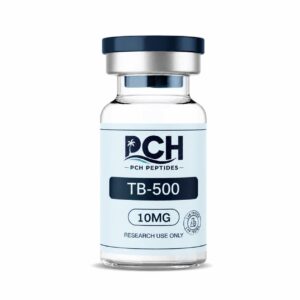
Researchers interested in thymosin beta-4-related materials can review the TB-500 research peptide product page.
For additional background on peptide structures and laboratory applications, explore the What Are Peptides? Research Guide.
Thymosin Alpha-1 10mg Specifications
| Property | Value |
| Product name | Thymosin Alpha-1 |
| Also known as | TA1, Tα1, Thymalfasin |
| Peptide type | N-terminally acetylated polypeptide |
| Length | 28 amino acid residues |
| Structural origin | Fragment of prothymosin alpha |
| N-terminal modification | Acetylation |
| Molecular formula | C129H215N33O55 |
| Molecular weight | Approximately 3108.3 g/mol |
| CAS number | 62304-98-7 |
| Research applications | Immune-related cellular signalling and peptide characterization |
| Amount per vial | 10mg |
| Form | Lyophilized powder |
| Purity | 99.84% |
Thymosin Alpha-1 in Laboratory Research
Thymosin Alpha-1 is investigated in biochemical and cellular models involving immune-related signalling, peptide interactions and regulatory molecular pathways.
T-Cell Signalling Research
T lymphocytes are immune cells involved in adaptive immune responses and cellular communication.
Thymosin Alpha-1 has been investigated in experimental models involving T-cell-associated signalling and immune-cell regulation.
Researchers examine its relationships with molecular pathways associated with immune-cell activity, differentiation and signalling responses.
Laboratory studies may assess changes in cellular markers, gene expression and signalling proteins under controlled experimental conditions.
These investigations contribute to the characterization of peptide-related immune mechanisms.
However, results from cell-based and animal studies do not establish the safety or therapeutic effectiveness of research-grade Thymosin Alpha-1 in humans.
Toll-Like Receptor Signalling Studies
Toll-like receptors (TLRs) are a family of receptors involved in innate immune recognition and cellular signalling.
Thymosin Alpha-1 has been investigated in experimental research involving TLR-associated molecular pathways.
Researchers examine how peptide-related interactions may influence signalling systems associated with innate immune responses.
These studies may involve receptor-related assays, molecular markers and controlled cellular models.
The molecular effects observed depend on experimental conditions, and Thymosin Alpha-1 should not be assumed to act as a direct agonist of every TLR pathway investigated.
Immune-Related Gene Expression Research
Thymosin Alpha-1 is also studied in laboratory models involving the expression of genes associated with immune-cell activity.
Researchers may examine changes in molecular signalling markers and transcription-related processes under controlled experimental conditions.
These investigations contribute to understanding the relationship between regulatory peptides and cellular signalling systems.
Findings from such studies remain dependent on the experimental model and should not be interpreted as proof of clinical benefit.
Prothymosin Alpha and Peptide Fragment Research
Thymosin Alpha-1 is derived from the N-terminal region of prothymosin alpha, a larger protein associated with cellular regulatory processes.
Researchers compare Thymosin Alpha-1 with related peptide fragments to investigate differences in molecular structure and biochemical interactions.
The peptide’s N-terminal acetylation and defined amino acid sequence are relevant to its molecular characterization.
These structural properties make it useful for analytical studies involving peptide identity, stability and chemical modification.
Peptide Stability and Analytical Characterization
Thymosin Alpha-1 contains 28 amino acid residues, making it longer than many short synthetic regulatory peptides.
Researchers investigate its chemical properties, molecular identity and stability through controlled analytical methods.
Laboratory investigations may examine peptide degradation, sequence integrity and the influence of environmental conditions on material stability.
Its acetylated N-terminus is an important structural characteristic when evaluating the compound’s molecular specifications.
Certificate of Analysis
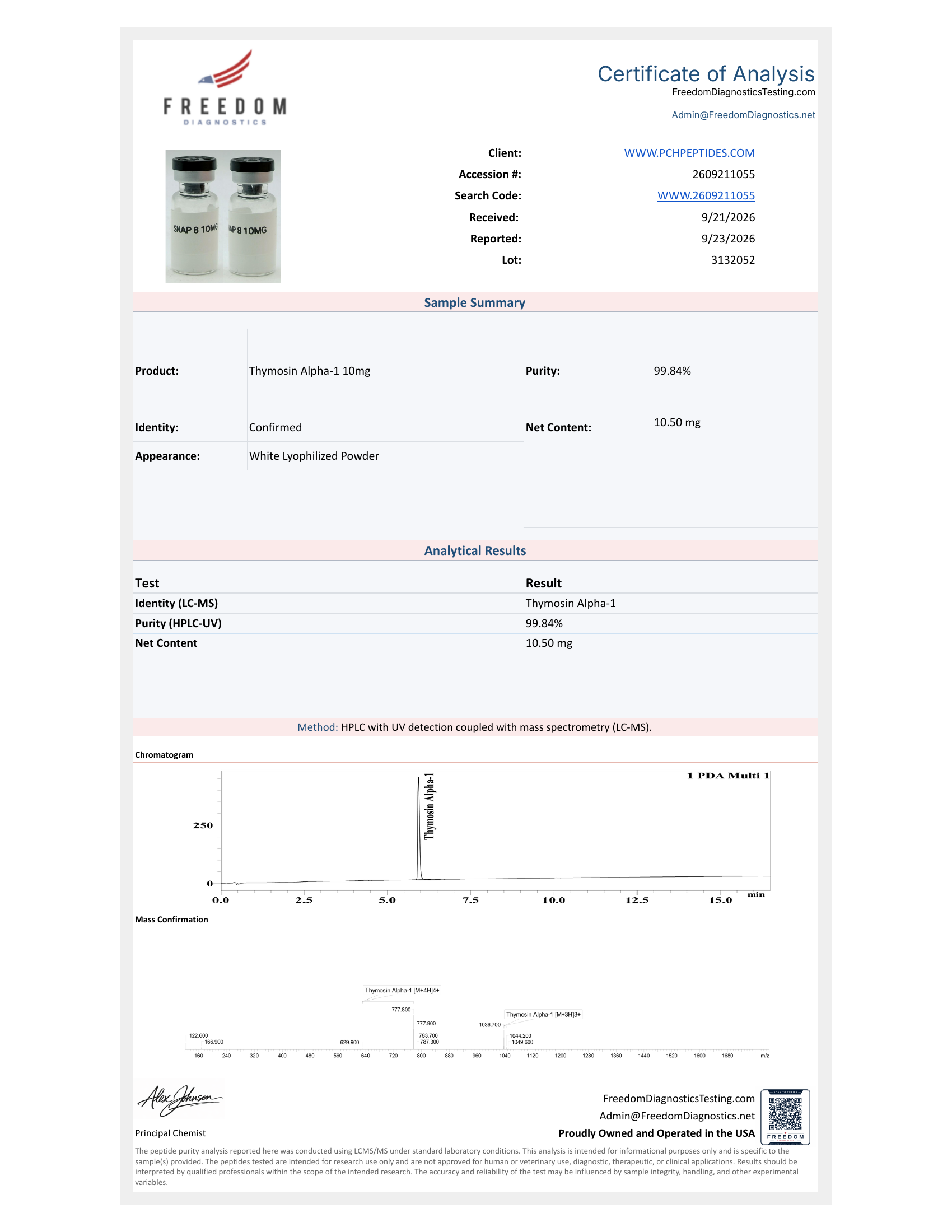
PCH Peptides provides batch-specific analytical documentation for its Thymosin Alpha-1 research material.
The PCH Peptides COA Library lists one Certificate of Analysis and one endotoxin report for Thymosin Alpha-1.
Researchers should review the applicable batch Certificate of Analysis to confirm compound identity, HPLC purity percentage and other available analytical findings.
The exact purity percentage should be obtained directly from the current batch documentation rather than assumed from general product specifications.
The certificate should also be reviewed for batch identification and any relevant formulation-specific characteristics.
The endotoxin report should be evaluated separately because endotoxin testing and HPLC purity testing measure different aspects of material quality.
Batch-specific documentation helps laboratories assess material identity, analytical consistency and traceability.
For additional information about research material classifications and analytical documentation, review the Research Use Only Peptides Guide.
Storage and Handling
Keep the Thymosin Alpha-1 vial sealed until required for an authorized laboratory workflow.
Store the lyophilized research material in a cold, dry environment protected from moisture, excessive heat and direct light.
Follow the storage temperature and handling recommendations provided on the product label and applicable batch-specific documentation.
Appropriate storage conditions help maintain the integrity of synthetic peptides during laboratory handling and analytical investigation.
Avoid using material from containers with damaged packaging, broken seals or uncertain identification.
Reconstitution Solution is available separately for suitable laboratory applications, subject to compatibility with the intended research workflow.
Researchers seeking general information about lyophilized peptide preparation can review the educational article on how peptide reconstitution works.
Related Research Materials
Laboratories investigating regulatory peptides, immune-related cellular signalling and molecular characterization may also examine other research compounds.
- TB-500 – A synthetic research peptide associated with thymosin beta-4 sequence research. It is investigated in laboratory models involving peptide structure, cellular signalling and cell-migration-associated processes.
- KPV – A synthetic tripeptide composed of lysine, proline and valine. It is derived from the C-terminal sequence of alpha-melanocyte-stimulating hormone and investigated in inflammatory signalling and short-peptide chemistry.
- Epithalon – A synthetic tetrapeptide containing Ala-Glu-Asp-Gly, investigated in laboratory models involving cellular regulation, gene expression and molecular characterization.
- GHK-Cu – A copper-binding tripeptide complex investigated in peptide-metal coordination, molecular interactions and extracellular matrix-associated research.
These materials have different amino acid sequences, molecular structures and research applications.
Thymosin Alpha-1 is an acetylated 28-amino-acid peptide derived from prothymosin alpha, while TB-500 is associated with thymosin beta-4-related research.
KPV, Epithalon and GHK-Cu are shorter peptide-related compounds investigated in different areas of cellular and biochemical research.
Researchers can explore additional materials through the PCH Peptides research catalog.
Frequently Asked Questions
What is Thymosin Alpha-1?
Thymosin Alpha-1 is a 28-amino-acid N-terminally acetylated peptide originally isolated from thymus tissue.
It is derived from the larger precursor protein prothymosin alpha and is investigated in immune-related cellular signalling and regulatory peptide research.
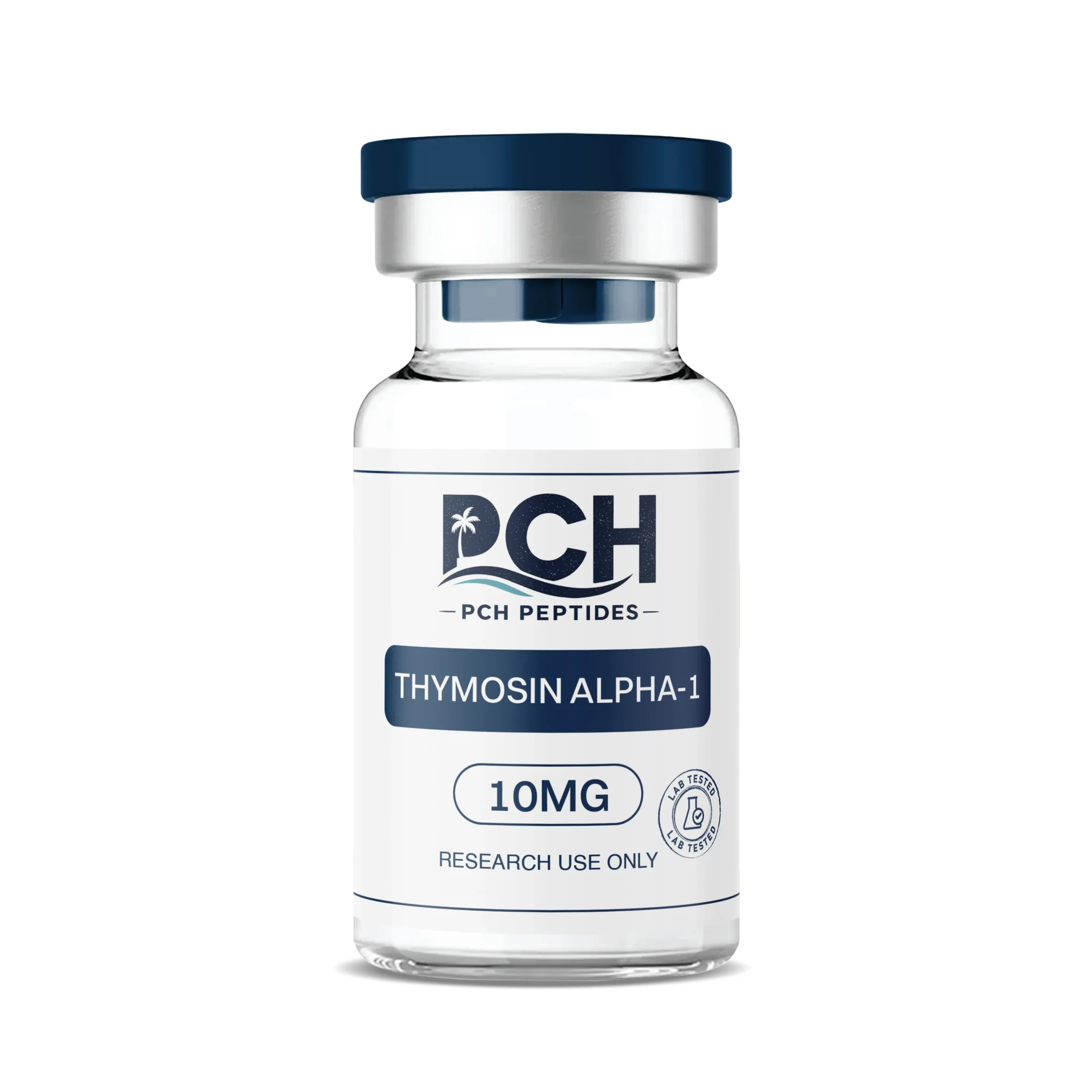
PCH Peptides lists Thymosin Alpha-1 as a 10mg lyophilized laboratory research material.
Is Thymosin Alpha-1 the same as Thymalfasin?
Yes. Thymalfasin is the name used for the chemically synthesized form of Thymosin Alpha-1.
Both refer to the same reference 28-amino-acid acetylated peptide structure.
The molecular formula is C129H215N33O55, with an approximate molecular weight of 3108.3 g/mol.
What is Thymosin Alpha-1 used for in research?
Thymosin Alpha-1 is investigated in laboratory studies involving immune-cell signalling, T-cell-associated pathways, toll-like receptor-related mechanisms and peptide characterization.
Researchers also examine its molecular properties, structure and stability in controlled experimental models.
These applications do not establish therapeutic effectiveness or safety for research-grade products intended for human use.
How is Thymosin Alpha-1 different from TB-500?
Thymosin Alpha-1 and TB-500 are associated with different peptide structures.
Thymosin Alpha-1 is a 28-amino-acid peptide derived from prothymosin alpha.
TB-500 is associated with thymosin beta-4-related peptide research.
Although both names are connected with thymosin research, their amino acid sequences and experimental research profiles are different.
What is the molecular weight of Thymosin Alpha-1?
Thymosin Alpha-1 has an approximate molecular weight of 3108.3 g/mol and a molecular formula of C129H215N33O55.
These specifications refer to the reference peptide structure. Any salt-form or formulation-specific differences should be checked against the applicable batch documentation.
How many amino acids are in Thymosin Alpha-1?
Thymosin Alpha-1 contains 28 amino acid residues.
The peptide is acetylated at its N-terminus, making N-terminal acetylation an important characteristic of its chemical structure.
What is the relationship between Thymosin Alpha-1 and prothymosin alpha?
Thymosin Alpha-1 corresponds to an N-terminal fragment of prothymosin alpha, a larger protein involved in cellular regulatory processes.
Researchers study the peptide fragment independently to investigate its molecular characteristics and related signalling interactions.
What size does Thymosin Alpha-1 come in?
PCH Peptides supplies Thymosin Alpha-1 as a 10mg lyophilized research material in a single vial.
The product is intended exclusively for qualified laboratory, academic and institutional research applications.
Is Thymosin Alpha-1 batch tested?
The PCH Peptides COA Library lists one Certificate of Analysis and one endotoxin report for Thymosin Alpha-1.
Researchers should review the applicable batch documentation to verify compound identity, purity and available analytical findings.
The documentation can be accessed through the COA Library.
How should Thymosin Alpha-1 be stored?
Thymosin Alpha-1 should remain sealed and protected from moisture, excessive heat and direct light.
Follow the temperature and handling recommendations printed on the product label and any applicable batch-specific documentation.
Appropriate storage helps maintain the integrity of lyophilized peptide research materials.
Is Thymosin Alpha-1 intended for human or animal use?
No. PCH Peptides supplies Thymosin Alpha-1 strictly for laboratory, academic and institutional research.
It is not intended for human or animal consumption, injection, therapeutic applications, diagnosis or veterinary use.
Although Thymalfasin has pharmaceutical applications in some countries, this research-grade product must not be represented as an approved medication.
For additional information about research material classifications, review the Research Use Only Peptides Guide.
Do you provide dosage instructions for Thymosin Alpha-1?
No. PCH Peptides does not provide dosage, administration or usage protocols. Thymosin Alpha-1 is supplied exclusively for qualified research use only.