Research Use Only Disclaimer
Kisspeptin-10 is sold strictly for laboratory, academic and institutional research. It is not for human or animal consumption, injection, or any therapeutic, diagnostic or veterinary use. PCH Peptides does not provide dosage, administration or usage guidance.
What Is Kisspeptin-10?
Kisspeptin-10 is a synthetic decapeptide consisting of ten amino acids. It represents the biologically active C-terminal region of kisspeptin, a naturally occurring peptide derived from the KISS1 gene product.
Kisspeptins are produced through the processing of a larger precursor protein. Kisspeptin-54 is one of the longer naturally occurring forms, while Kisspeptin-10 represents its ten-residue C-terminal fragment.
The amino acid sequence of Kisspeptin-10 is Tyr-Asn-Trp-Asn-Ser-Phe-Gly-Leu-Arg-Phe-NH2.
Kisspeptin-10 interacts with the KISS1 receptor, also known as GPR54, a G protein-coupled receptor involved in neuroendocrine signalling.
Researchers investigate Kisspeptin-10 in controlled laboratory models involving receptor-ligand binding, peptide stability, molecular characterization and signalling pathways associated with the hypothalamic-pituitary-gonadal axis.
Because KISS1 receptor activation is associated with gonadotropin-releasing hormone (GnRH) signalling, Kisspeptin-10 is a subject of research involving neuroendocrine receptor interactions.
For additional background on peptide classifications and laboratory applications, explore the PCH Peptides research guide.
Kisspeptin-10 10mg Specifications
| Property | Value |
| Product name | Kisspeptin-10 |
| Peptide type | Synthetic decapeptide |
| Parent peptide | Kisspeptin |
| Sequence | Tyr-Asn-Trp-Asn-Ser-Phe-Gly-Leu-Arg-Phe-NH2 |
| Length | 10 amino acids |
| Molecular formula | C63H83N17O14 |
| Molecular weight | Approximately 1302.4 g/mol |
| Primary receptor target | KISS1R (GPR54) |
| Amount per vial | 10mg |
| Form | Lyophilized powder |
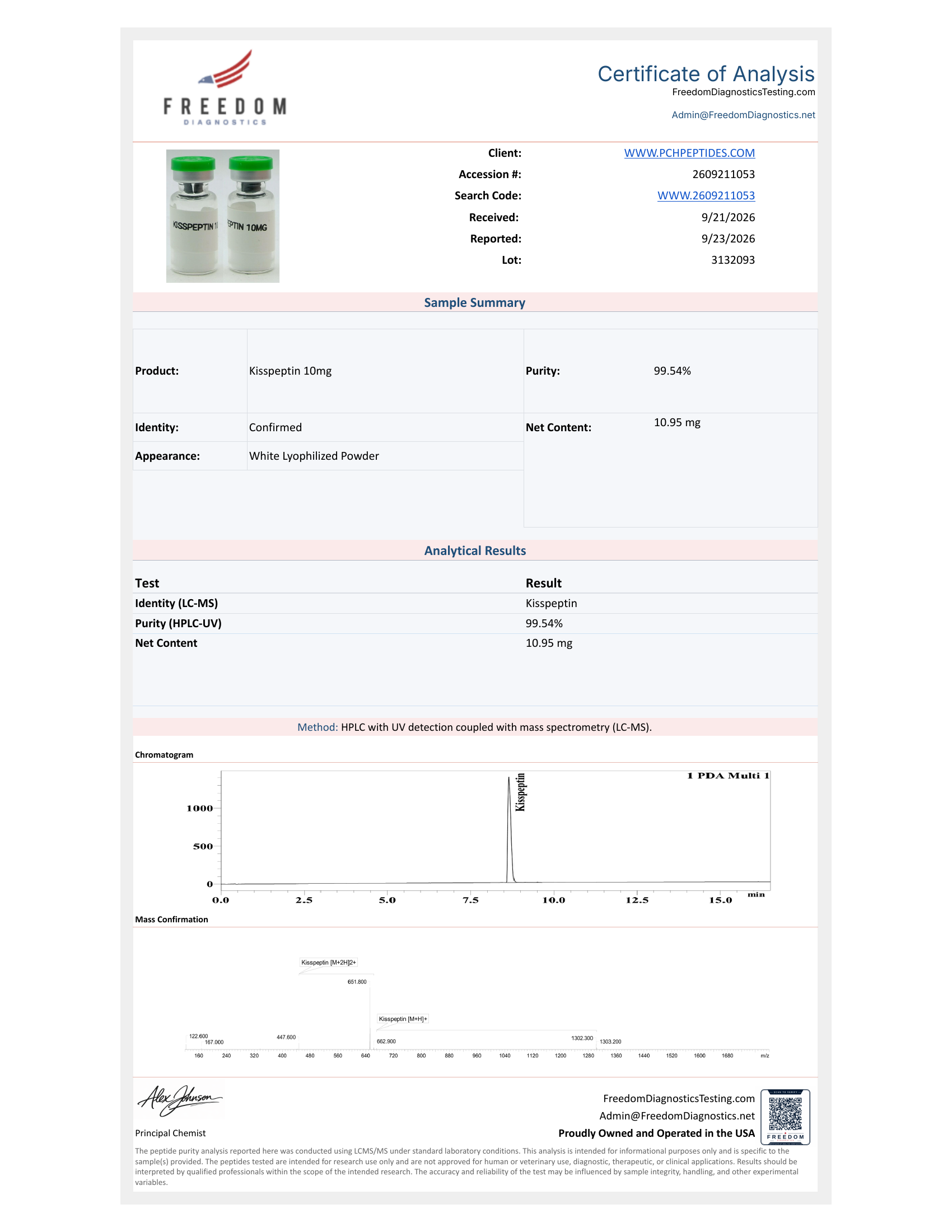
| Purity | 99.54% |
Kisspeptin-10 in Laboratory Research
Kisspeptin-10 is investigated in biochemical and cellular studies involving peptide-receptor interactions, neuroendocrine signalling and molecular characterization.
KISS1 Receptor (GPR54) Binding
The KISS1 receptor, also known as GPR54, is a G protein-coupled receptor that interacts with kisspeptin peptides.
Kisspeptin-10 contains the C-terminal sequence responsible for much of the receptor-activating activity associated with kisspeptin.
Researchers study its receptor-binding properties through biochemical assays, molecular modelling and controlled cellular signalling experiments.
These investigations may evaluate ligand affinity, receptor activation and downstream signalling responses.
Neuroendocrine Signalling Research
Kisspeptin signalling is closely associated with the regulation of gonadotropin-releasing hormone pathways.
Researchers investigate Kisspeptin-10 in laboratory models examining molecular interactions between the KISS1 receptor and neuroendocrine signalling systems.
These studies contribute to the characterization of receptor-mediated communication and peptide signalling mechanisms.
Kisspeptin-10 is not a substitute for GnRH, and its receptor interactions differ from those of GnRH receptor agonists.
Peptide Structure and Stability Studies
Kisspeptin-10 is a short synthetic peptide with a defined ten-amino-acid sequence.
Its relatively compact structure makes it relevant to laboratory investigations involving peptide stability, molecular characterization and analytical method development.
Researchers may examine its chemical properties and structural behaviour under controlled experimental conditions.
Findings from non-clinical studies do not establish therapeutic safety or effectiveness in humans.
Certificate of Analysis
PCH Peptides provides batch-specific analytical documentation for its Kisspeptin-10 research material.
The PCH Peptides COA Library lists one Certificate of Analysis and one endotoxin report for Kisspeptin-10.
Researchers should review the applicable batch Certificate of Analysis to confirm compound identity, HPLC purity and other available analytical findings.
The exact purity percentage should be taken directly from the current batch COA rather than assumed from general product specifications.
The endotoxin report should be reviewed separately because endotoxin testing and HPLC purity testing measure different aspects of material quality.
Batch-specific documentation supports laboratory quality assessment and material traceability.
For additional information about research material classifications and analytical documentation, review the Research Use Only Peptides Guide.
Storage and Handling
Keep the Kisspeptin-10 vial sealed until required for an authorized laboratory workflow.
Store the lyophilized material in a cold, dry environment protected from moisture, excessive heat and direct light, following the temperature recommendations provided on the product label and applicable batch documentation.
Appropriate storage conditions help maintain the integrity of synthetic peptide research materials during laboratory handling.
Avoid using material from vials with damaged packaging, broken seals or uncertain identification.
Reconstitution Solution is available separately for suitable laboratory research applications, subject to compatibility with the intended analytical workflow.
Researchers seeking general information about lyophilized peptide handling can review the educational guide on how peptide reconstitution works.
Related Research Materials
Laboratories investigating peptide-receptor interactions, neuroendocrine signalling and molecular characterization may also examine other synthetic research peptides.
- PT-141 – A synthetic melanocortin-active peptide investigated in receptor-ligand binding and molecular signalling studies. It interacts with melanocortin receptors rather than the KISS1 receptor.
- DSIP – Delta Sleep-Inducing Peptide, a synthetic nonapeptide investigated in neuropeptide chemistry, peptide stability and receptor-interaction research.
Although these compounds are studied in overlapping areas of neuropeptide research, they differ in molecular structure and receptor-interaction characteristics.
Kisspeptin-10 is associated with KISS1 receptor research, while PT-141 is investigated in melanocortin receptor models. DSIP is studied in neuropeptide chemistry, although a dedicated DSIP receptor has not been conclusively identified.
Researchers can explore additional materials through the PCH Peptides research peptide catalog.
Frequently Asked Questions
What is Kisspeptin-10?
Kisspeptin-10 is a synthetic ten-amino-acid peptide corresponding to the C-terminal region of kisspeptin-54.
It contains the sequence Tyr-Asn-Trp-Asn-Ser-Phe-Gly-Leu-Arg-Phe-NH2 and is investigated for its interaction with the KISS1 receptor.
Which receptor does Kisspeptin-10 bind?
Kisspeptin-10 binds and activates the KISS1 receptor, also known as GPR54.
This receptor is involved in neuroendocrine signalling pathways associated with gonadotropin-releasing hormone regulation.
Researchers investigate the interaction through receptor-binding assays and controlled molecular signalling models.
What is Kisspeptin-10 used for in research?
Kisspeptin-10 is investigated in laboratory studies involving KISS1 receptor binding, neuroendocrine signalling, peptide stability and molecular characterization.
Researchers also examine its interactions with signalling pathways associated with the hypothalamic-pituitary-gonadal axis.
These research applications do not establish clinical safety or effectiveness.
What is the amino acid sequence of Kisspeptin-10?
Kisspeptin-10 contains ten amino acids arranged in the sequence Tyr-Asn-Trp-Asn-Ser-Phe-Gly-Leu-Arg-Phe-NH2.
The sequence represents the active C-terminal fragment of kisspeptin-54.
What is the molecular weight of Kisspeptin-10?
Kisspeptin-10 has an approximate molecular weight of 1302.4 g/mol and a molecular formula of C63H83N17O14.
These specifications refer to the C-terminally amidated decapeptide.
How is Kisspeptin-10 different from Kisspeptin-54?
Kisspeptin-54 contains 54 amino acid residues, whereas Kisspeptin-10 contains only the final ten residues of the longer peptide.
Despite its shorter structure, Kisspeptin-10 retains receptor-activating properties associated with the KISS1 receptor.
Researchers compare kisspeptin fragments to examine differences in molecular structure, receptor interactions and peptide stability.
What size does Kisspeptin-10 come in?
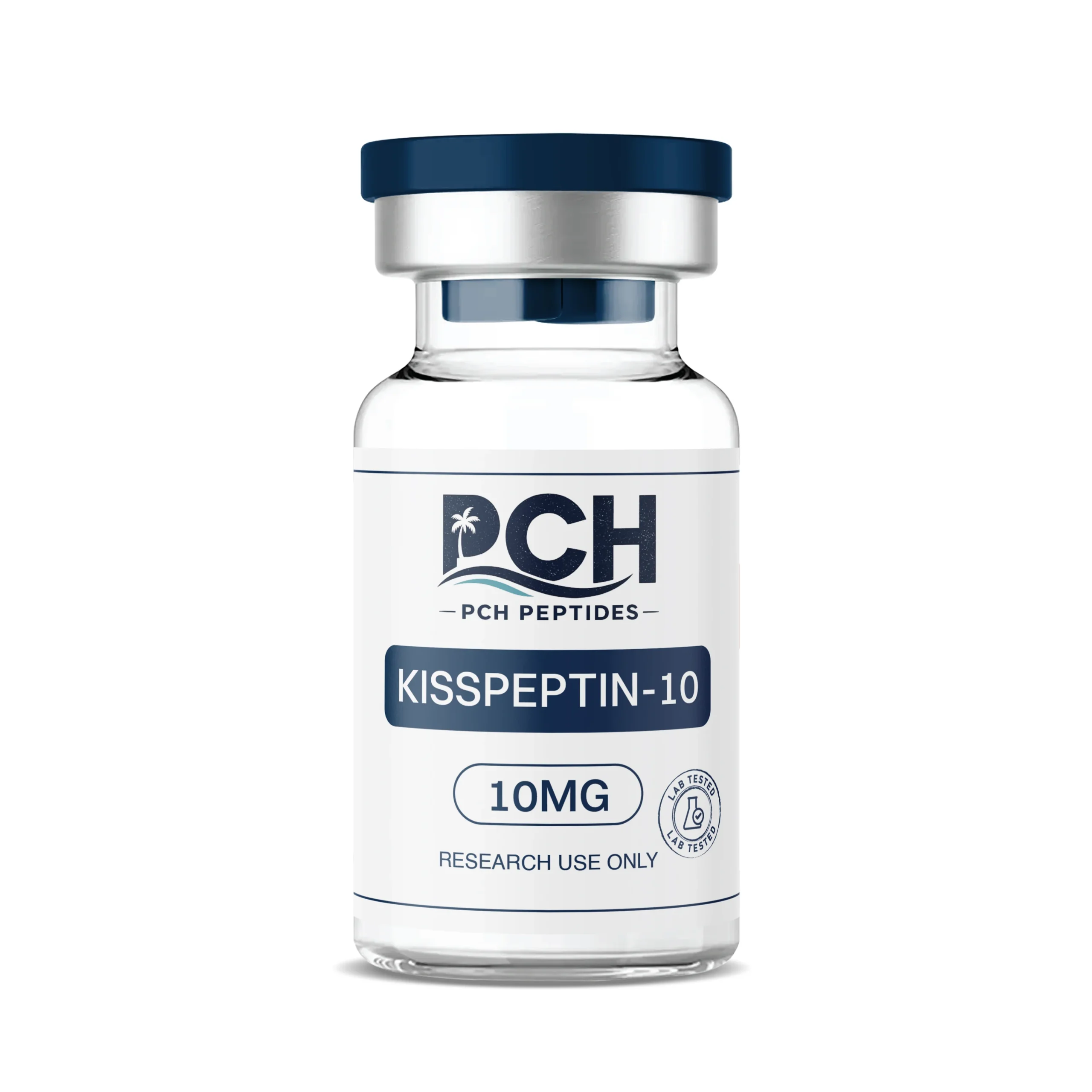
PCH Peptides supplies Kisspeptin-10 as a 10mg lyophilized research material in a single vial.
The product is intended exclusively for qualified laboratory, academic and institutional research applications.
Is Kisspeptin-10 batch tested?
The PCH Peptides COA Library lists one Certificate of Analysis and one endotoxin report for Kisspeptin-10.
Researchers should review the applicable batch documentation to verify compound identity, purity and available analytical testing results.
Available certificates can be accessed through the COA Library.
How should Kisspeptin-10 be stored?
Kisspeptin-10 should remain sealed and protected from moisture, excessive heat and direct light.
Follow the temperature and handling recommendations printed on the product label and any applicable batch-specific documentation.
Appropriate storage helps maintain the integrity of lyophilized peptide research materials.
Is Kisspeptin-10 intended for human or animal use?
No. Kisspeptin-10 is supplied strictly for laboratory, academic and institutional research.
It is not intended for human or animal consumption, injection, therapeutic applications, diagnosis or veterinary use.
For more information about research material classifications, read the Research Use Only Peptides Guide.
Do you provide dosage instructions for Kisspeptin-10?
No. PCH Peptides does not provide dosage, administration or usage protocols. Kisspeptin-10 is supplied exclusively for qualified research use only.